Devastation in Northern Venezuela After Powerful Earthquakes
In the aftermath of a devastating natural disaster, communities across northern Venezuela are coming together to search for survivors trapped beneath rubble after two powerful earthquakes struck the region. The tremors, which occurred on Wednesday night, have left more than 230 people dead and thousands injured, according to the latest reports from the Health Ministry.
Rising Casualties and Desperate Searches
The official death toll has reached approximately 235, with over 4,300 individuals suffering injuries. Health Minister Carlos Alvarado has indicated that these numbers are likely to rise as rescue operations continue and reports of missing persons increase. Thousands of Venezuelans remain unaccounted for, prompting frantic efforts by both civilians and emergency responders.
The earthquakes, measured at magnitudes of 7.2 and 7.5, are among the most severe to hit Venezuela in over a century. The seismic activity was felt throughout the region, causing significant structural damage.
Communities Rally Amid Lack of Government Support
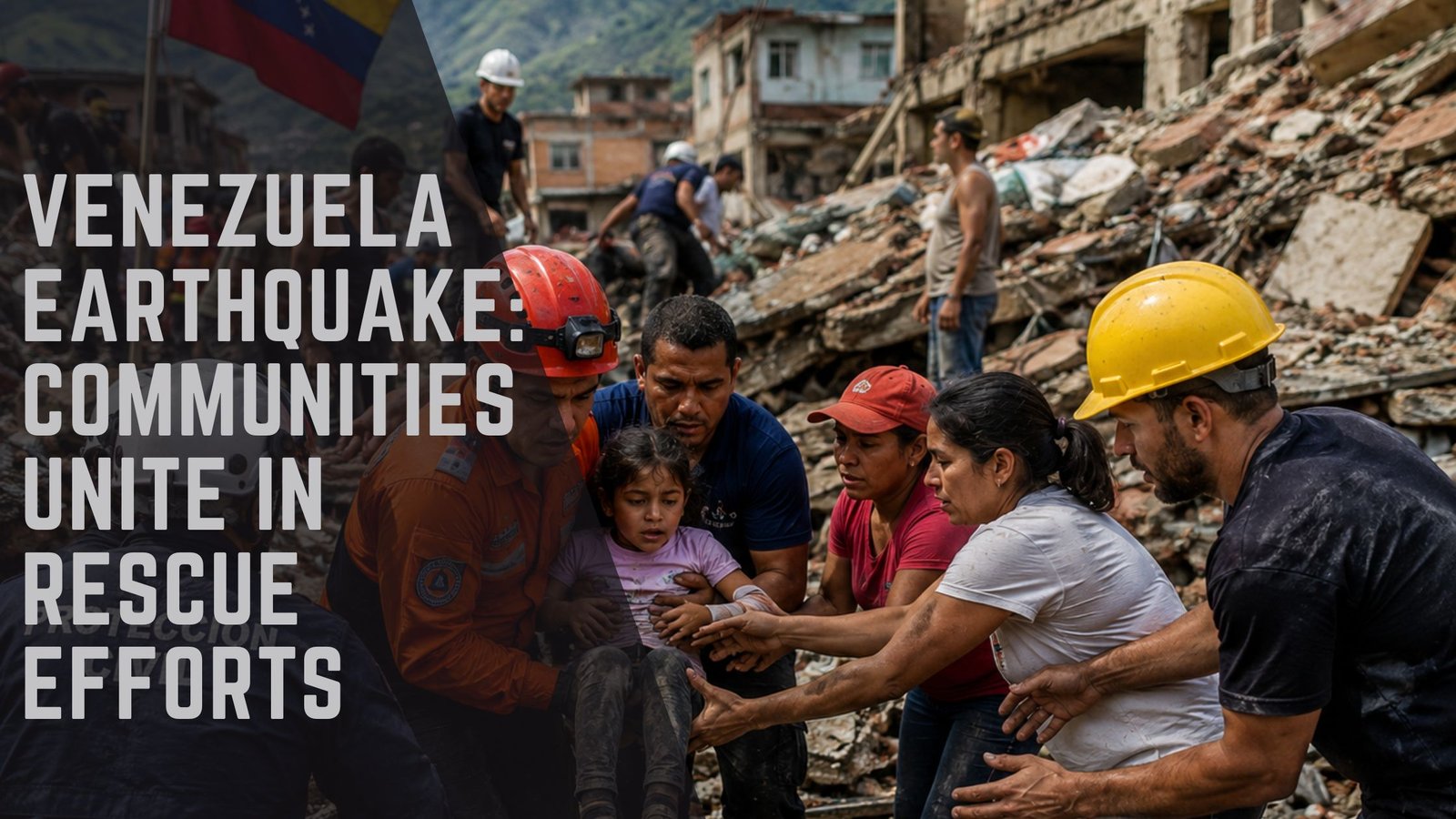
Amidst the chaos, neighbors have become first responders, pulling people—children and adults alike—from the debris. Venezuelan state television has broadcasted harrowing images of these rescue efforts, including a woman extricated from beneath a cement slab. Despite such efforts, government rescue teams have been notably absent in areas outside the capital of Caracas.
In La Guaira, a coastal city north of Caracas, the damage is particularly severe. The city’s infrastructure has been heavily compromised, and its main airport has been closed, hindering the arrival of international aid. Residents have been left to their own devices, using makeshift tools to search for loved ones.
Heart-wrenching Scenes and Community Resilience
Scenes of devastation are accompanied by the emotional turmoil of those searching for missing family members. Flyers and lists of missing persons are scattered throughout affected areas. Communication disruptions have left many Venezuelans abroad in distress, unable to reach their families back home.
In Caracas, parks and open spaces have become temporary shelters for hundreds who fear returning to their homes. Dayana Delgado, a local mother, voiced frustrations over the absence of promised government assistance, as she continues to search for her missing son.
Government Response and International Aid
Acting President Delcy Rodríguez has declared a state of emergency and announced a $200 million reconstruction fund. However, criticisms abound regarding the government’s slow response and lack of resources on the ground. Rodríguez has appealed to private businesses to lend heavy machinery for ongoing rescue operations.
International aid is beginning to reach Venezuela, with countries such as Mexico, Brazil, and Spain pledging support. U.S. Secretary of State Marco Rubio has committed to providing American assistance, despite logistical challenges posed by the airport’s closure.
Geological Background and Future Concerns
Despite its location near tectonic boundaries, Venezuela experiences fewer earthquakes compared to other Latin American countries. However, the shallow depth of these recent quakes exacerbated the destruction. Geophysicist Marcos Ferreira explained that the combination of successive tremors amplified the damage.
The global response has been robust, with international rescue teams arriving to aid Venezuelan efforts. The Venezuelan diaspora is also playing a crucial role, mobilizing resources from abroad to support their homeland.
In a time of crisis, the resilience and solidarity displayed by Venezuelans are a testament to their strength and determination to rebuild and recover.