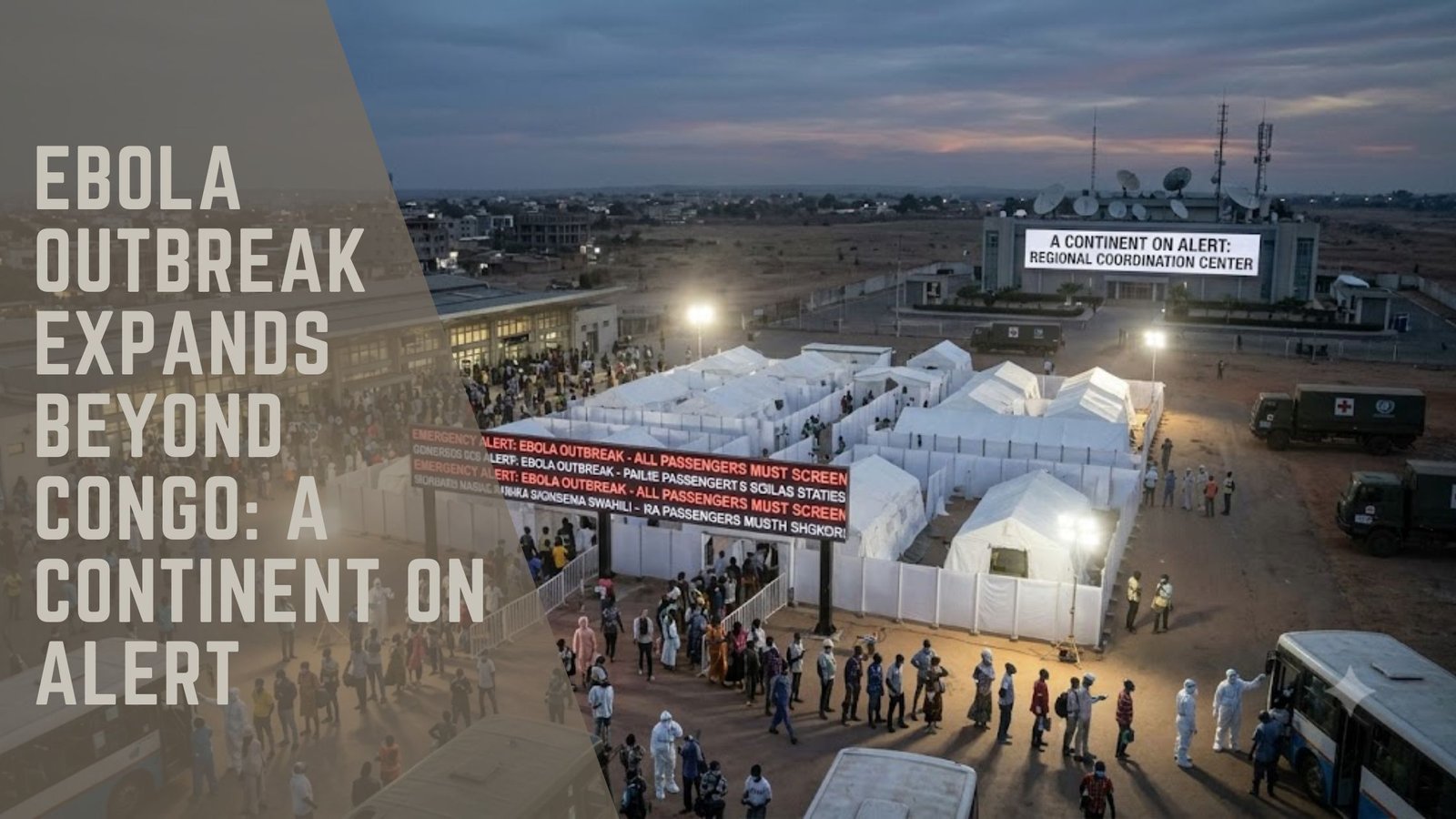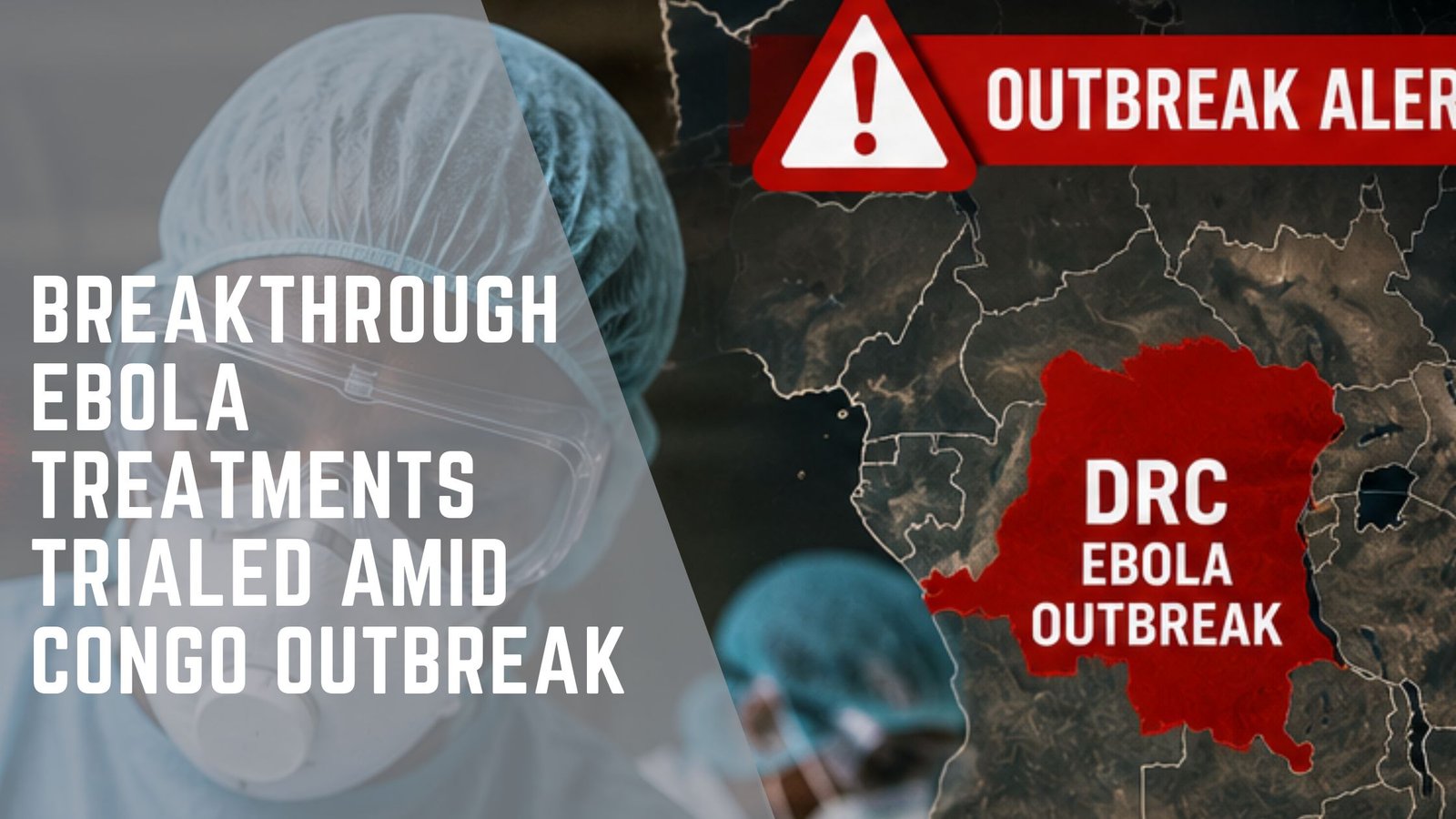
Introduction of Experimental Treatments in Congo’s Ebola Crisis
Bunia, Congo: As the Ebola epidemic continues to claim lives in Congo, hope emerges from a new clinical trial launched in early July. Researchers are now testing two experimental treatments in the epicenter of the outbreak, offering a potential lifeline to those affected by the virus.
Urgency at the Heart of Bunia’s Ebola Treatment Center
At Bunia’s Evangelical Medical Centre, located in Ituri Province, the atmosphere is one of urgency rather than ceremony as the trial begins. Ambulances frequently arrive, and healthcare workers, donned in full protective gear, are seen tirelessly working in isolation wards. The research is being conducted parallel to ongoing efforts to save lives.
The Bundibugyo Strain: A Unique Challenge
The current Ebola outbreak in Congo is attributed to the Bundibugyo strain, a variant for which no specific treatment or vaccine exists. According to World Health Organization (WHO) data, over 1,400 individuals have been diagnosed, resulting in 438 fatalities. This underscores the critical need for effective medical interventions.
Details of the Clinical Trial
WHO Director-General Tedros Adhanom Ghebreyesus announced the enrollment of the first participant in a trial assessing the efficacy of remdesivir, an antiviral drug, and MBP134, an experimental antibody treatment. The trial investigates whether these treatments, individually or combined, can enhance survival rates for those infected with the Bundibugyo virus. Patient outcomes will be monitored over a 28-day period following treatment initiation.
Collaborative International Effort
The trial is a collaborative effort, involving WHO, Congo’s National Institute for Biomedical Research (INRB), the University of Oxford, the Institute of Tropical Medicine in Antwerp, and other international organizations. According to Professor Yap Boum from the Africa Centres for Disease Control and Prevention, the trial’s initial phase focuses on confirmed Ebola patients receiving care in specialized facilities. Future phases aim to include healthcare workers, close contacts, and other high-risk individuals.
Community Hopes and Challenges
For many in Bunia, the trial represents a rare beacon of hope. Local resident Audrey Tengetenge describes it as a “light at the end of the tunnel,” expressing a strong desire for swift progress to alleviate the community’s suffering.
Gladys Munguro, an Ebola survivor, reflects on her experience, having witnessed the loss of fellow patients. She expresses optimism that the new treatments will improve survival rates and control the outbreak. She is willing to participate in future trial phases designed for high-risk groups.
Community Mistrust and Additional Obstacles
Despite the optimism, researchers face challenges, including community mistrust. Nelson Dhebi, a local shopkeeper, supports the research but expresses concerns about potential risks. He suggests that initial research should involve public representatives to build trust.
Community mistrust is compounded by other obstacles, such as overcrowded treatment centers, delays in seeking medical treatment, and security issues in conflict-affected areas. Pierre Akilimali, Incident Manager at Congo’s National Institute of Public Health, reports that nearly 75% of Ebola deaths in the current outbreak occur outside healthcare facilities.
Moving Forward Amidst Security Concerns
Currently, the trial is limited to Bunia’s Evangelical Medical Centre in Ituri. The region is plagued by violence, including attacks against healthcare workers. Expansion of the study to additional locations is planned, contingent upon improved security conditions.