Andy Burnham: From Regional Leader to National Figure
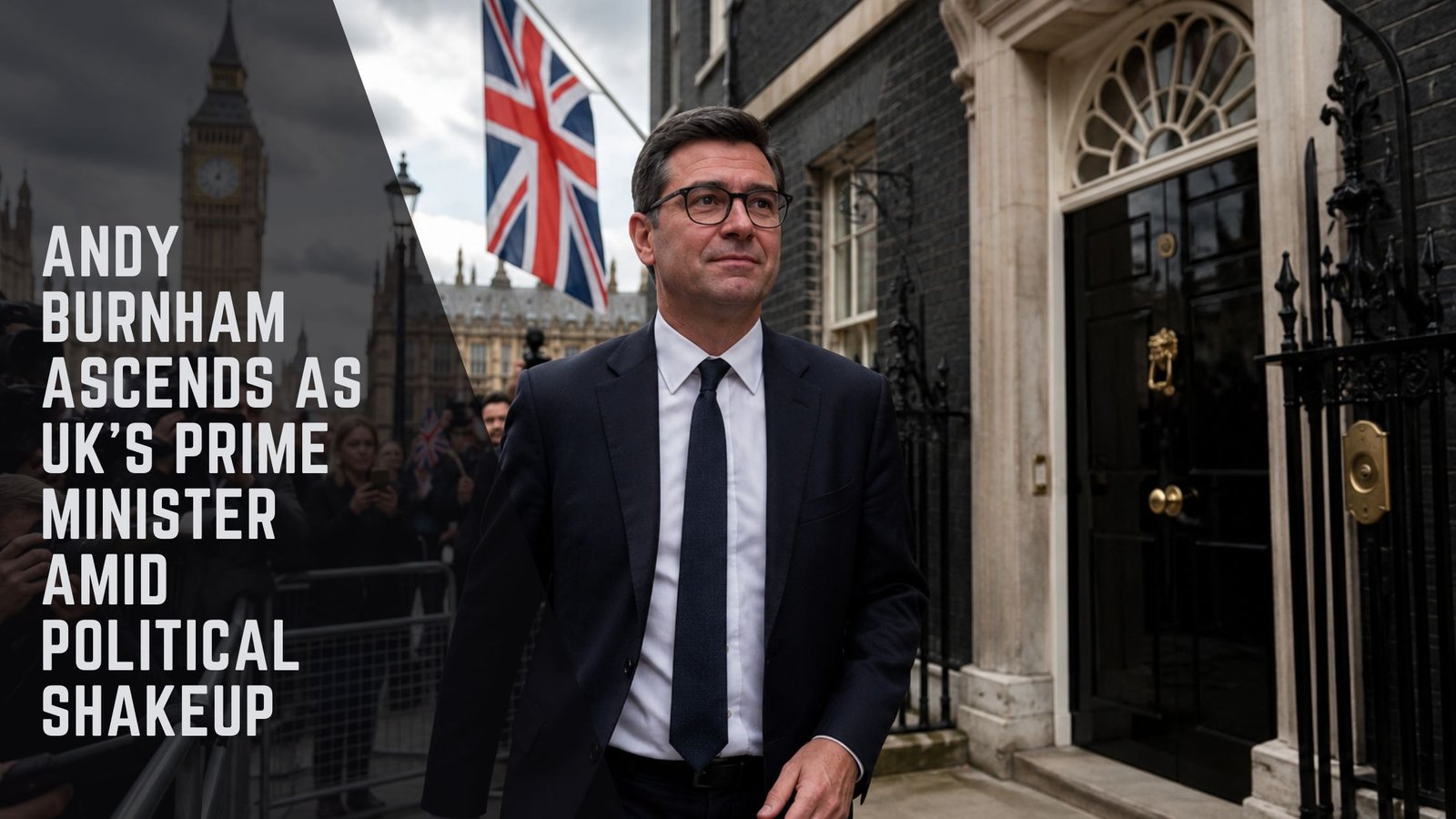
In a remarkable turn of events, Andy Burnham is set to become the United Kingdom’s 59th prime minister following the abrupt resignation of Keir Starmer. Burnham’s political journey, characterized by strategic risk-taking and a deep connection with his roots, has culminated in this significant leadership role.
Early Life and Influences
Born in Liverpool and raised in a village between Manchester and Liverpool, Burnham’s upbringing in a Catholic, working-class family instilled in him values of social justice and community. His father, a British Telecom engineer, and his mother, a receptionist, emphasized the importance of education, leading Burnham and his brothers to become the first in their family to attend university. His academic journey took him to Cambridge University, where he studied English and met his future wife, Marie-France Van Heel.
Political Career and Manchester Leadership
After graduating, Burnham entered journalism before transitioning to politics as a researcher and adviser within the Labour Party. Elected as a Member of Parliament in 2001, he climbed the political ranks, eventually serving in the cabinets of Prime Ministers Tony Blair and Gordon Brown. His tenure included roles as Chief Secretary to the Treasury, Culture Secretary, and Health Secretary.
In 2017, Burnham took a pivotal step by leaving Parliament to run for Mayor of Greater Manchester. During his time as mayor, he advocated for a balanced approach to governance, blending business-friendly policies with social welfare initiatives—an approach dubbed ‘Manchesterism’. His efforts revitalized Manchester, a city historically known for its industrial prowess.
A Champion for Justice and Regional Advocate
Burnham’s dedication to justice was notably demonstrated during his involvement in the aftermath of the Hillsborough disaster, where he supported the families of the victims in their quest for truth and accountability. This episode not only showcased his empathy but also his commitment to transparency and integrity in public service.
His tenure as mayor was marked by significant improvements in public transport and infrastructure, alongside a strong stance during the COVID-19 pandemic against policies he deemed unfairly biased towards London. His vocal advocacy earned him the moniker ‘King of the North’, a testament to his strong regional support and political aspirations.
Challenges and Future Prospects
Burnham’s ascension to the role of prime minister comes amidst numerous national challenges, including economic stagnation, public service pressure, and complex international relations. Critics have voiced concerns about his lack of clarity on funding his ambitious policies, as well as his limited experience in foreign affairs.
Despite these challenges, supporters believe Burnham’s pragmatic approach and ability to unite diverse groups will be key assets in his new role. His promise to decentralize power by enhancing regional authority and his plan to establish a ‘No. 10 North’ office in Manchester reflect his commitment to bridging regional disparities.
The Road Ahead for Burnham
As he steps into the role of prime minister, Burnham faces the formidable task of navigating a nation of 70 million people. His leadership will be tested by both domestic issues and international dynamics. However, allies like Sacha Lord, who worked closely with him during his mayoral tenure, describe him as a determined and formidable leader capable of confronting and overcoming significant challenges.
Burnham’s rise reflects the dynamic nature of British politics and the evolving landscape of leadership where regional champions can ascend to national prominence. His journey from Manchester’s mayor to the country’s prime minister is a testament to his resilience and the shifting tides of political fortune in the UK.