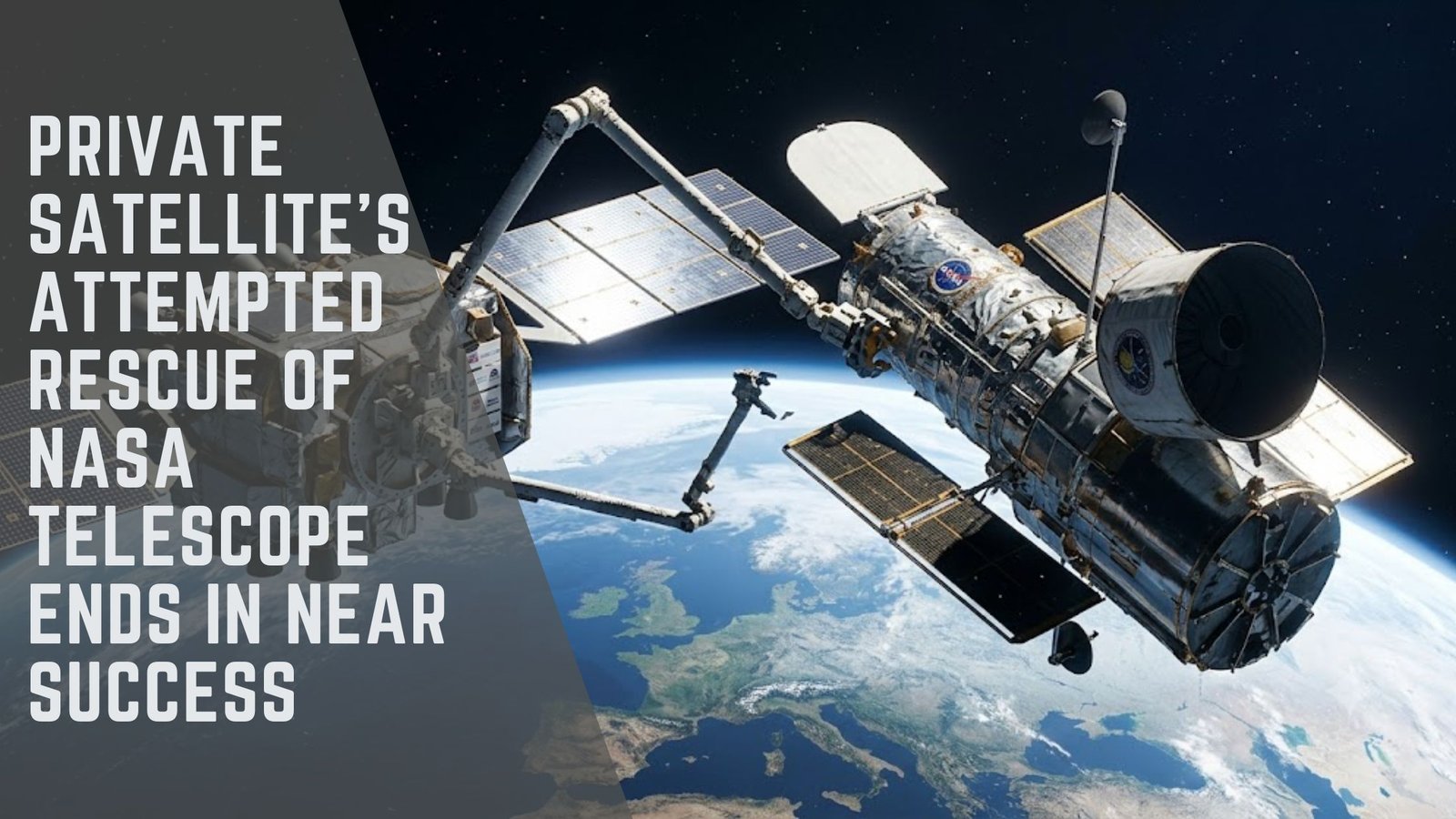
Cape Canaveral, Florida: A private satellite mission aimed at extending the operational life of NASA’s Swift Observatory came remarkably close to success, despite its ultimate inability to save the aging telescope. Katalyst Space Technologies, the company behind the mission, has termed the effort a valuable learning experience.
Close Encounter with Swift
Katalyst Space Technologies launched its Link spacecraft in a bid to stabilize and elevate the orbit of the NASA Swift Observatory, which has been gradually descending due to solar activity. Last weekend, the Link spacecraft approached within 15 kilometers (nine miles) of Swift, utilizing its sensors to gather critical data. Despite the mission’s cancellation weeks earlier due to fuel shortages, the attempt provided invaluable insights for future missions.
Fuel Shortage Halts Rescue
The mission faced significant challenges from the start. Within days of its July launch, Link experienced an uncontrollable spin. While flight controllers managed to stabilize it, the effort depleted much of the spacecraft’s fuel reserves. Consequently, there wasn’t enough fuel remaining to boost the Swift Observatory to a more sustainable orbit.
Your CEO, Ghonhee Lee, attributed these difficulties to the rush in mission preparation. “We were working against time, which meant compromising on the ideal components and setup,” Lee explained. The mission was assembled in just nine months, driven by a $30 million contract from NASA.
NASA’s Perspective
NASA Administrator Jared Isaacman acknowledged the mission’s shortcomings but emphasized its experimental nature. “These are precisely the kinds of missions that help us learn and adapt,” Isaacman stated, highlighting the potential benefits of extending spacecraft lifespans.
NASA is already applying these lessons to future projects. For instance, the Roman Space Telescope, launched recently, has been designed with refueling capabilities, ensuring it can remain operational even from a million miles away.
Future Prospects for Satellite Servicing
While Link cannot make another attempt to save Swift, it will continue to trial maneuvers and data collection until its expected re-entry into Earth’s atmosphere next month. NASA continues to utilize Swift for observations, despite its impending descent expected between October and year’s end.
Swift’s fate underscores the growing risk solar activity poses to space assets, with even the renowned Hubble Space Telescope facing similar challenges. Katalyst is already working on a next-generation satellite that could potentially extend Hubble’s operational life.
“Servicing satellites was once a niche area,” Lee remarked, “but it’s becoming increasingly mainstream, especially as we prioritize sustainability in space operations.”
Conclusion
Although the mission did not achieve its primary goal, it provided crucial data and experience that could shape the future of satellite servicing. As the demand for extending the life of space telescopes and other critical satellites increases, missions like these pave the way for innovative solutions to the challenges of space exploration.