Emirates Declines Initial 777X Deliveries
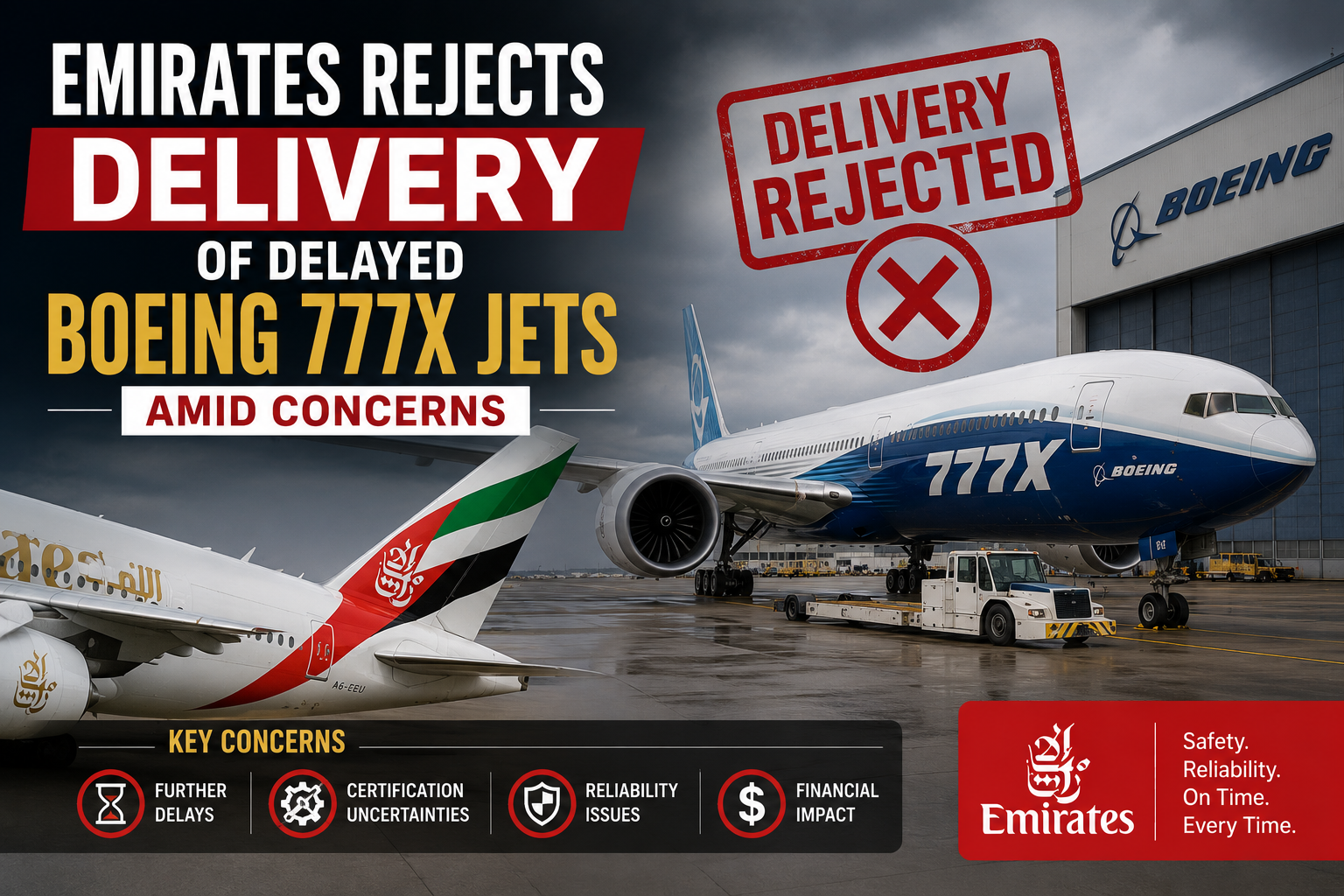
In a significant development for the aviation industry, Emirates Airlines has opted not to accept the first batch of Boeing 777X jets, citing extensive delays and extensive modifications. The airline’s president, Sir Tim Clarke, expressed dissatisfaction with the aircraft’s usability, humorously suggesting they might be better suited as containers for canned goods.
Concerns Raised at Farnborough Airshow
During the Farnborough International Airshow, Clarke articulated Emirates’ decision, highlighting the impracticality of the planes due to substantial changes since their original production in 2019. He clarified that the airline was firm in its stance, allowing Boeing the freedom to decide the fate of these jets.
Clarke’s comments underscore a broader frustration with the protracted delays that have marred the 777X program, initially slated for service in 2020 but now postponed by several years.
Emirates’ Investment in the 777X Program
As the largest customer of the 777X series, Emirates has invested heavily with 270 aircraft orders, each priced at approximately $440 million. Despite this commitment, the protracted timeline and design revisions have prompted Emirates to halt acceptance of the initial deliveries. Clarke emphasized that while the airline supports the overall program, the specific aircraft batch has undergone excessive alterations that render them impractical for use.
Technical Challenges and Delays
The 777X program has encountered numerous technical issues, including a thrust control system fault that halted test flights in 2024 and a 2020 incident involving unintended propeller movement. Additionally, a structural endurance test failure contributed to the postponements, exacerbating the already extended delay.
Structural Testing and Modifications
Emirates’ apprehensions extend to structural testing results, where an airframe’s hull failed prematurely, raising questions about the modifications’ effectiveness. Clarke pointed out that the comprehensive changes since the initial flights necessitate a reevaluation of these aircraft’s viability.
In 2025, further reports emerged detailing the dismantling of one 777X jet after six years of inactivity near Boeing’s Seattle facility. This incident reflects ongoing challenges Boeing faces in maintaining the aircraft’s integrity amidst evolving design requirements.
Boeing’s Response and Future Plans
Stephanie Pope, President of Boeing Commercial Aircraft, addressed these issues, asserting that the company is committed to evolving the aircraft’s design. She emphasized Boeing’s continuous assessment of upgrade costs versus operational benefits, ensuring optimal solutions for both the company and its clients.
Despite these assurances, the juxtaposition of Emirates’ decision and technical hurdles highlights the complexities Boeing must navigate to meet customer expectations and industry standards.
Impact on Aviation Industry
Emirates’ decision to reject the initial 777X deliveries underscores broader implications for the aviation sector, particularly concerning new aircraft development and delivery timelines. The delays and technical challenges faced by Boeing not only influence customer relationships but also impact market confidence in new aviation technologies.
As the industry closely monitors these developments, stakeholders await Boeing’s next steps in addressing the ongoing challenges and restoring confidence in the 777X program.