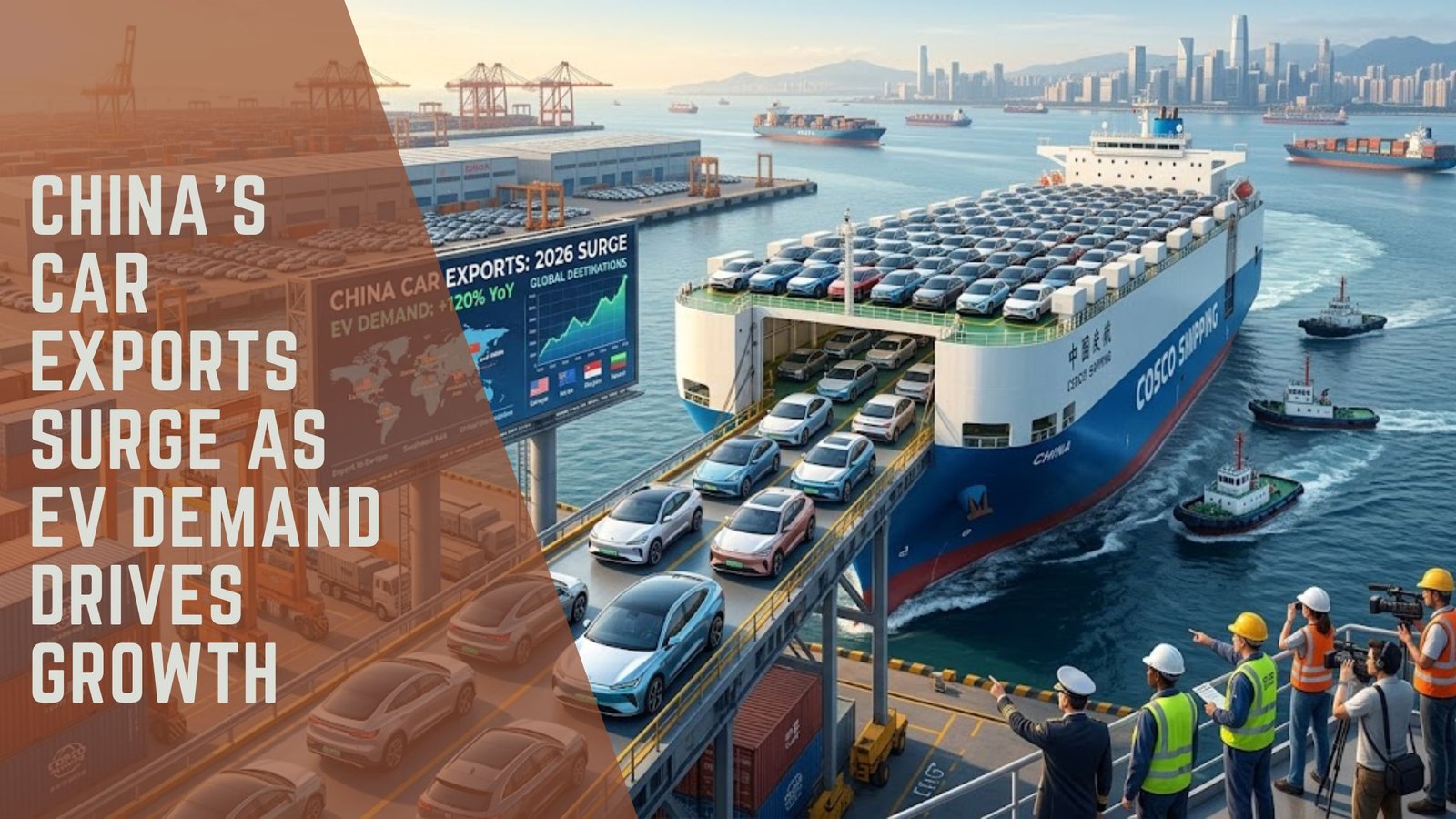
China’s Export Growth Surpasses 2025 Totals in Eight Months
In a remarkable development for China’s automotive industry, the nation has exceeded its 2025 passenger car export figures within the first eight months of 2026. This growth is largely attributed to the increasing global appetite for electric vehicles (EVs) and plug-in hybrids.
Significant Year-on-Year Growth
The China Association of Automobile Manufacturers (CAAM) reports a substantial 67.1% increase in passenger car exports in August alone, totaling approximately 890,000 units. Overall, China exported over 6.2 million passenger vehicles from January to August 2026, surpassing the 6 million units exported in the entirety of 2025. Last year, China’s total vehicle exports, including commercial vehicles, reached 7.1 million units.
Analysts Predict Continued Expansion
Industry analysts express optimism about the continued growth of China’s car exports. S&P Global Ratings forecasts an annual increase in passenger vehicle exports of between 50% and 70% this year. This optimistic outlook is bolstered by China’s competitive pricing strategies and enhancements in vehicle quality.
Domestic Market Challenges
Despite the robust export performance, China’s domestic automotive market faces challenges, with passenger car sales in China declining by 25.6% in August compared to the previous year, amounting to just under 1.5 million vehicles. Experts suggest that the ongoing export expansion may help mitigate the impact of shrinking domestic demand. Stephen Chan, Associate Director at S&P Global Ratings, emphasizes the potential for export growth to counterbalance domestic market weakness.
Electric Vehicles Fuel Export Growth
The global shift towards electric vehicles has accelerated, driven by rising fuel prices that encourage consumers to abandon traditional petrol and diesel options. Chinese automakers have capitalized on this trend, enhancing their EV offerings to meet international demand.
Challenges in the US, Success in Other Regions
While tariffs have limited China’s passenger car sales in the United States, the country’s automotive exports have flourished in Europe, Latin America, Africa, and Southeast Asia. Chinese manufacturers have also expanded their presence overseas by investing in new factories in international markets, further cementing their global footprint.
Global Expansion and Strategic Investments
Chinese automakers are increasingly investing in overseas manufacturing facilities, a strategic move to bolster their presence in key markets. This international expansion aligns with China’s broader economic goals and facilitates the continued growth of its automotive sector.
Conclusion
As China continues to lead the charge in the global automotive industry, its focus on electric vehicles and strategic international partnerships positions it as a formidable player on the world stage. The growth in exports, coupled with investments in overseas manufacturing, underscores the nation’s commitment to maintaining its competitive edge in the evolving automotive landscape.