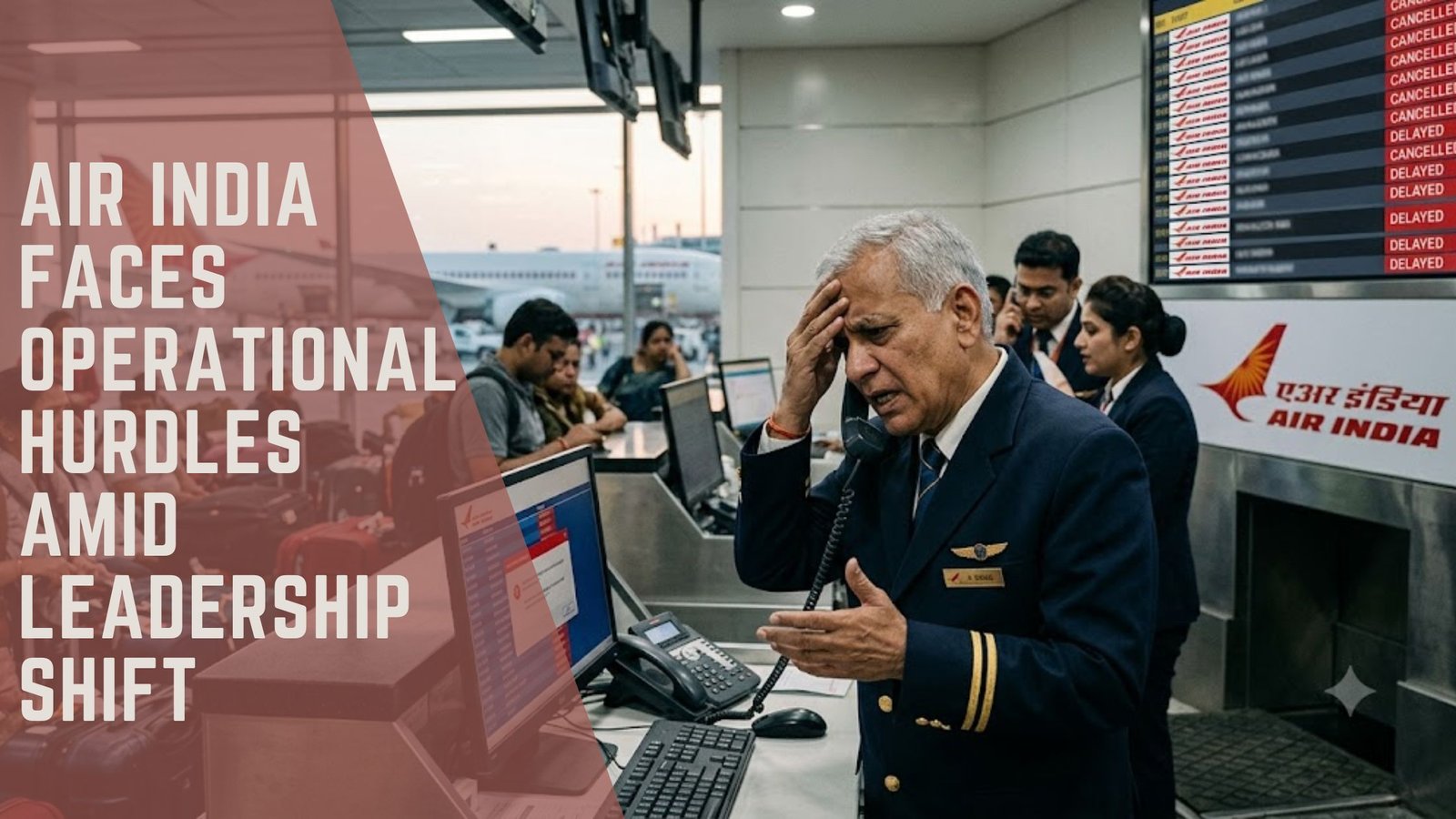
In a significant leadership transition, Air India, jointly owned by the Tata Group and Singapore Airlines, has appointed Tewolde Gebremariam as its new CEO. This change arrives at a pivotal moment for the airline, which is grappling with substantial financial losses and heightened scrutiny over safety protocols.
Intensified Safety Scrutiny
The tragic incident involving an Air India Boeing 787 in Ahmedabad in June 2025, resulting in 260 fatalities, has brought the airline’s safety practices under severe examination. Indian aviation authorities have criticized Air India for several lapses, including operating an Airbus A320 without a valid airworthiness review certificate and neglecting mandatory emergency equipment inspections. In response, the airline committed in December to overhauling its process discipline and compliance culture, acknowledging the urgent need for improvements.
Financial Challenges and Record Losses
Air India reported a staggering loss of over $2 billion for the fiscal year 2025-26, a significant increase from the previous year’s $1.13 billion loss. Since reverting to private ownership in 2022, the airline has yet to achieve profitability. Singapore Airlines’ auditors have expressed concerns about the viability of their investment in Air India due to challenging operating conditions and geopolitical instability, although a formal assessment indicated no need for immediate financial restatements.
Geopolitical Strains Affect Operations
Geopolitical tensions have further complicated Air India’s operations. Restrictions imposed by Pakistan on Indian airlines using its airspace since April 2025, compounded by conflicts in the Middle East, have forced the airline to reroute flights, resulting in longer travel times and increased operational costs. These disruptions have enabled foreign carriers to capitalize on the instability, capturing market share in routes previously dominated by Air India.
Fleet Modernization Efforts
Another challenge for Air India is modernizing its fleet, which has aged significantly due to years of neglect under state ownership. Although efforts are underway to refurbish aircraft interiors, progress has been impeded by supply chain shortages affecting seats and other essential components. The airline has over 500 new aircraft on order, but plans to defer deliveries as part of a strategy to cut costs and manage financial losses.
Under the leadership of Campbell Wilson, Gebremariam’s predecessor, significant consolidation took place, merging Vistara into Air India and integrating low-cost operations under Air India Express. Tata Sons Chairman N. Chandrasekaran has emphasized the importance of this period as a “critical execution and expansion era,” highlighting the strategic initiatives underway.
Strategic Outlook and Future Plans
As Tewolde Gebremariam assumes leadership, the focus will be on steering the airline through these turbulent times. Strengthening safety compliance and improving financial performance are top priorities. Additionally, optimizing the fleet and expanding international routes amidst geopolitical challenges will be crucial for Air India’s growth and sustainability.
The leadership change at Air India is a critical juncture, as the airline seeks to redefine its operations and reclaim its position as a leading player in the aviation industry. With the backing of Tata Group and strategic partnerships, the potential for transformation exists, but it will require significant effort and strategic maneuvering.