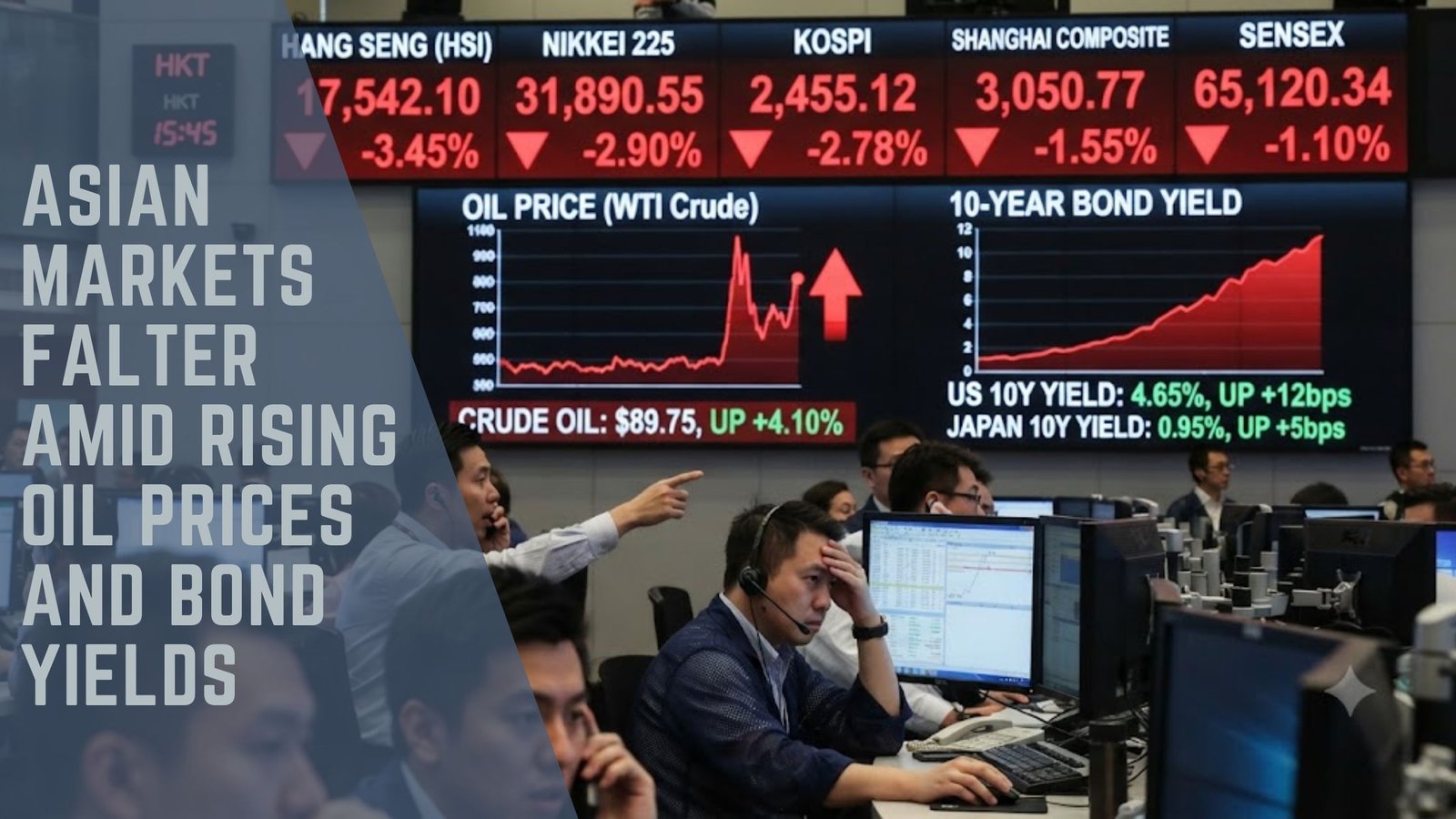
Asian Markets Experience Downturn as Oil Soars
On Monday, Asian stock markets witnessed a downturn as oil prices surged, driven by growing tensions between the United States and Iran. Investor confidence waned due to doubts over a swift resolution concerning the Strait of Hormuz, with uncertainties amplified by ongoing discussions between the two nations.
Strait of Hormuz: A Critical Chokepoint
US President Donald Trump’s dismissal of Iran’s proposal to reopen the strategic Strait of Hormuz has stoked fears over energy supply disruptions. Despite ongoing diplomatic efforts, Iran has shown little willingness to change its stance, creating a ripple effect through global markets.
Oil Prices Surge Amid Geopolitical Tensions
The price of Brent crude oil increased by 2.1%, reaching $106.49 per barrel, marking a substantial 18% rise over the month. Similarly, US crude oil saw a 1.5% increase, climbing to $93.84 per barrel. These hikes in energy prices have sparked concerns about deeper inflationary pressures, particularly as diesel prices remain at unprecedented highs due to constrained refining capacities.
Monetary Policy and Economic Data
With rising energy costs, the prospect of further monetary tightening by major central banks looms large. Investors are now anticipating a 66% probability of an interest rate hike by the US Federal Reserve in October, with an estimated 90 basis points of additional increases expected by the end of next year.
Despite apprehensions about higher interest rates, robust economic performance in the United States has bolstered expectations for corporate earnings growth. The Atlanta Federal Reserve’s GDPNow model forecasts a 5% economic growth rate for the current quarter, with resilient economic activity noted across parts of Asia and Europe, partially fueled by investments in artificial intelligence.
Asian Stock Markets and Global Indices
In the realm of equities, Japan’s Nikkei index showed minimal movement, while South Korea’s market experienced a significant 2.4% decline. MSCI’s broadest index of Asia-Pacific shares outside Japan fell by 0.6%, and Chinese blue-chip stocks decreased by 1.4%, extending their monthly losses beyond 5%.
US stock futures also trended downward, with S&P 500 futures declining by 0.3% and Nasdaq futures dropping by 0.5%. In contrast, European futures suggested a positive opening, with EURO STOXX 50 futures rising by 0.4%, DAX futures increasing by 0.3%, and FTSE futures up by 0.2%.
Bond Market Dynamics
Bond markets faced pressure as investors braced for a week filled with critical economic data releases, including reports on inflation, growth, and employment. The yield on the 30-year US Treasury bond climbed to 5.52%, approaching its peak since 2004, while two-year Treasury yields have surged this month amid forecasts of further rate hikes by the Federal Reserve.
Currency and Commodity Markets
The US dollar maintained its strength, with the dollar index standing at 101.39, near a two-month high. The euro was traded at $1.1380, and the dollar appreciated by 0.3% against the Japanese yen, reaching 157.73.
In the commodities sector, gold prices fell by 1.7% to $4,212 per ounce, extending monthly losses as rising bond yields diminished the appeal of non-yielding assets.