Introduction: A New Era of Leadership
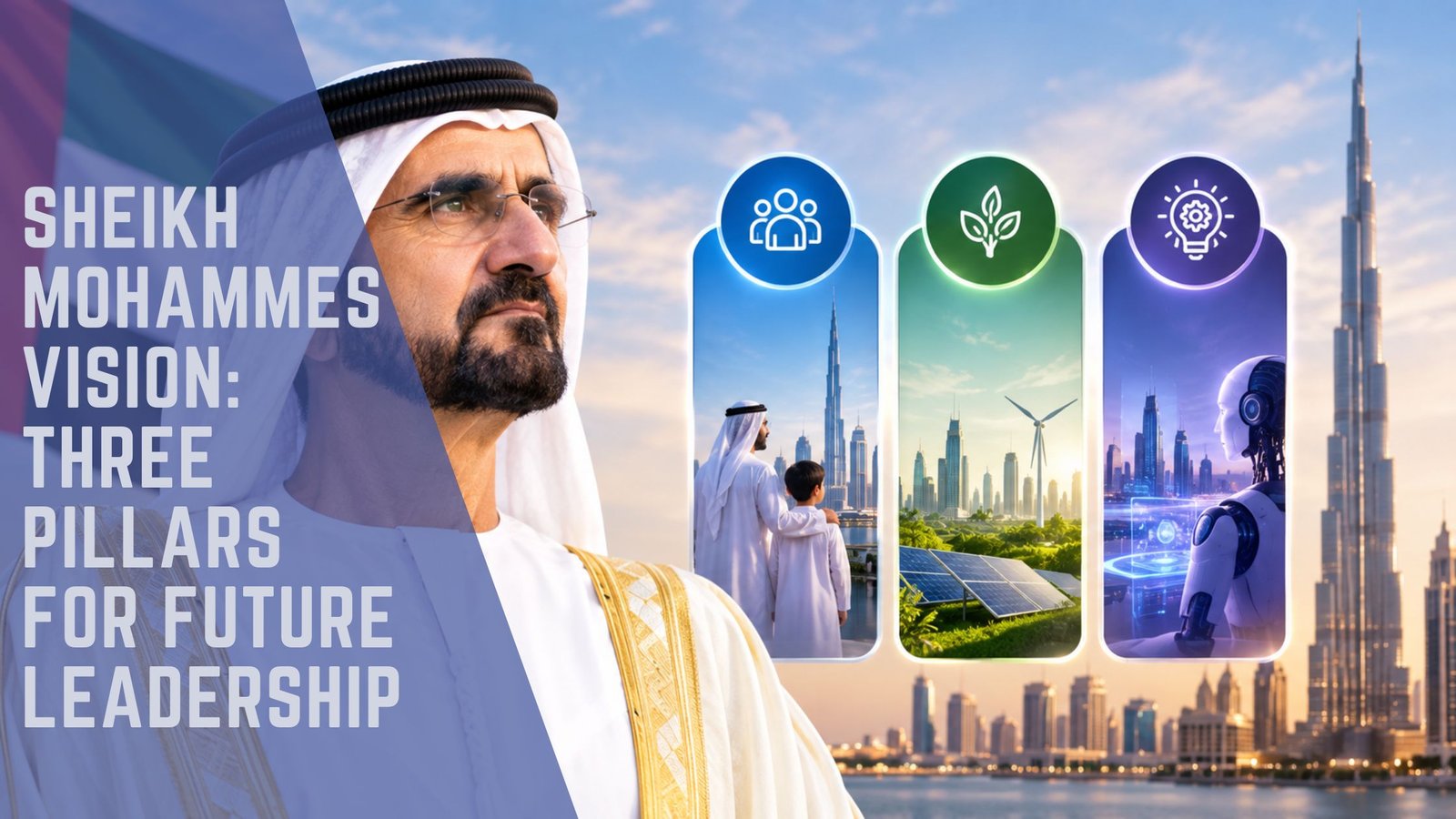
In a rapidly evolving world, His Highness Sheikh Mohammed bin Rashid Al Maktoum, Vice President and Prime Minister of the UAE and Ruler of Dubai, has articulated three foundational principles to guide young leaders of the future. These principles are tailored to navigate the complexities of an interconnected global landscape.
Reimagining Leadership Models
Sheikh Mohammed emphasized that the traditional paradigms of leadership are no longer sufficient. As global dynamics shift, future leaders must understand that past strategies may not deliver future success. “What got us here will not necessarily get us there,” he stated, marking a pivotal shift in leadership thought.
Understanding Multifaceted Change
The contemporary world is not only shaped by technological advancements but also by political and economic upheavals. Sheikh Mohammed illustrated this by highlighting how artificial intelligence boosts productivity, influencing labor markets and, subsequently, the socio-political fabric of nations. Leaders today face the challenge of navigating these simultaneous, multifaceted changes.
The Interconnected World
Recent developments underscore the global interconnectivity that defines our era. Innovations from a small startup can revolutionize industries, while a single social media post can disrupt global markets. Leaders must be adept at operating within this interconnected ecosystem.
Principle One: Cultivating Adaptive Organizations
Sheikh Mohammed advocates for leaders to prioritize building adaptive organizations over rigid long-term plans. The focus should be on fostering teams that continually learn, unlearn, and relearn. “Successful future leadership will be more about mastering readiness than the accuracy of prediction,” he noted.
Organizations that thrive will be those with diverse options and capabilities. The emphasis is on leaders who ask insightful questions rather than those who rely solely on past knowledge.
Principle Two: Empowering Human Potential
Sheikh Mohammed urged a rethinking of the conventional view of employees as mere “resources.” In contrast to machines, human creativity and innovation are invaluable. “Ideas will be the organization’s most valuable assets,” he asserted, encouraging leaders to foster environments where creativity can flourish.
Transforming Management Practices
Traditional management often involves monitoring and control, but future leadership should liberate employees to explore and innovate. By fostering trust and encouraging initiative, leaders can unlock the potential within their teams, avoiding the pitfalls of stifled creativity.
Principle Three: Accelerating Idea Execution
Speed is a critical factor in modern leadership, according to Sheikh Mohammed. As the pace of change accelerates, organizations risk falling behind if they cannot quickly transition from ideas to execution. “Today, delaying a decision is the greatest risk,” he emphasized.
Future leaders must leverage tools like artificial intelligence to expedite decision-making processes. The ability to act on ideas swiftly can distinguish successful organizations from their competitors.
The Imperative of Timely Decisions
In the current landscape, making timely decisions is more valuable than waiting for perfect solutions. History, Sheikh Mohammed suggests, will favor those who act decisively even amidst uncertainty.
Conclusion: Embracing the Future
As the world braces for changes that may arrive faster than anticipated, Sheikh Mohammed envisions a brighter future. By cultivating adaptability, continuous learning, and innovative environments, organizations can thrive in the face of uncertainty. “The future will be more beautiful if we can build a culture of adaptability in our institutions,” he concluded, outlining a path forward for aspiring leaders.