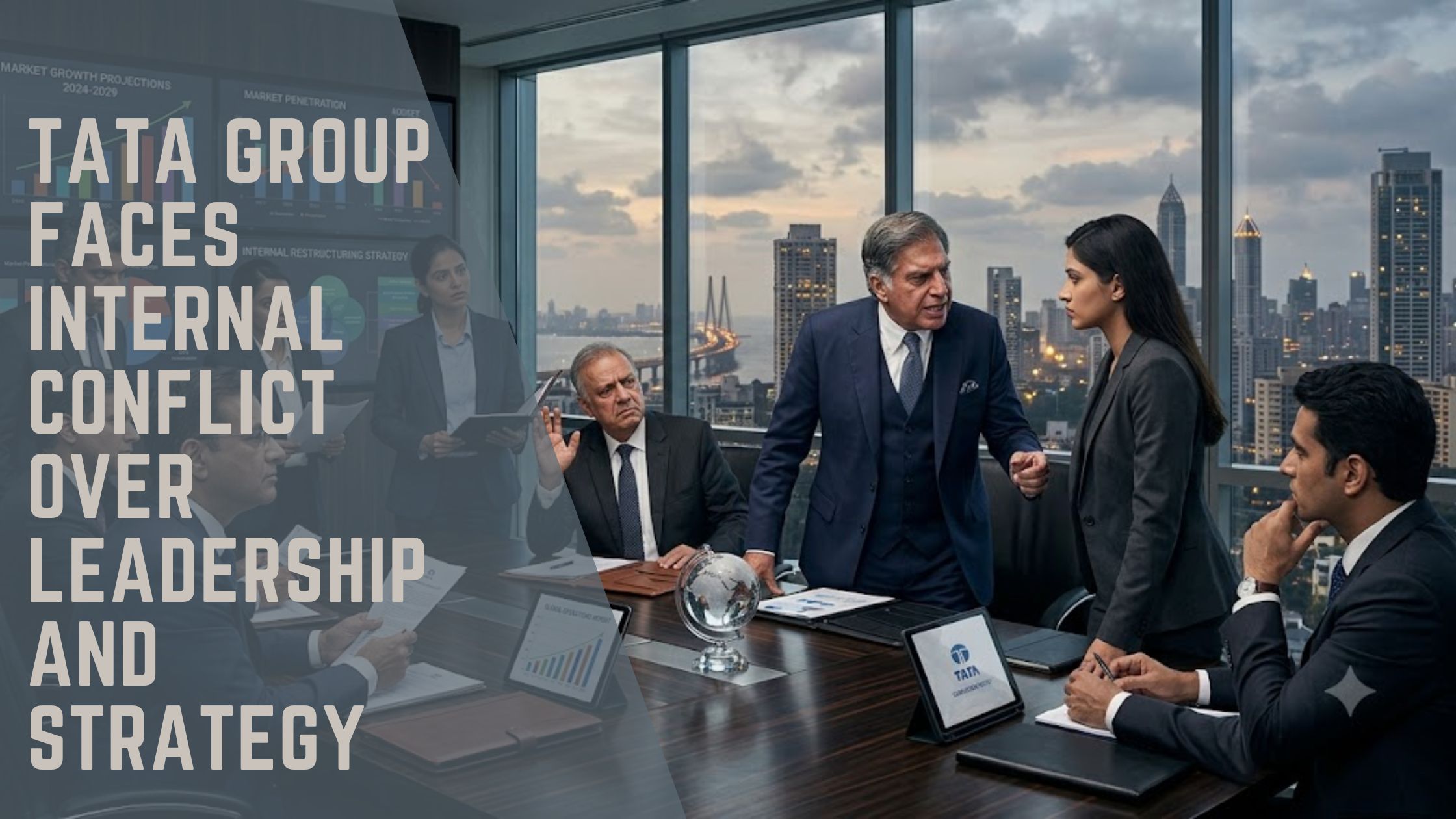
The Tata Group, a cornerstone of Indian industry known for its ownership of Jaguar Land Rover and Air India, is grappling with a significant internal conflict. This discord involves the board of Tata Sons and its controlling entity, Tata Trusts, casting a shadow over the future of the 158-year-old conglomerate.
Underlying Issues at Stake
The disagreement between Tata Sons and Tata Trusts has been simmering for months, primarily concerning the possible public listing of Tata Sons, the financial losses of Air India, and the exit strategy for a minority shareholder. Despite opposition from Tata Trusts, the board of Tata Sons recently reaffirmed Natarajan Chandrasekaran’s position as chairman for another five-year term.
Following this decision, Tata Trusts openly criticized the reappointment, deeming it a violation of internal procedures. The Trusts have also voiced strong opposition to the potential stock market listing of Tata Sons, arguing that such a move would fundamentally alter the character of a conglomerate predominantly owned by charitable entities.
Leadership and Historical Context
Tata Trusts, which holds a 66% stake in Tata Sons, is overseen by Noel Tata, a descendant of the company’s founding family. The dividends from the group’s operations are channeled into public charitable endeavors through the Trusts. Natarajan Chandrasekaran, who has been with Tata Group since 1987, is not a member of the Tata family.
The Tata legacy dates back to the 8th century, with the family being part of the Parsi community, the descendants of Zoroastrians who migrated from Persia to western India.
Challenges to Trusts’ Authority
Despite its significant ownership, Tata Trusts is currently unable to exert its influence over Tata Sons effectively. Internal challenges, particularly a legal restriction preventing the Sir Ratan Tata Trust from convening its trustees, have weakened its decision-making capabilities. This trust alone owns 23.6% of Tata Sons, yet the regulatory barriers prevent it from holding meetings to advocate for its objectives.
Scale and Influence of Tata Group
Established in 1868, Tata Group has a sprawling presence in over 100 countries across six continents. Tata Sons is the umbrella organization for more than 30 companies, including Tata Consultancy Services, Tata Motors, and Tata Steel. Its client list features global giants such as Apple and Tesla, while Starbucks is among its notable partners.
In the last financial year, Tata companies collectively generated $185 billion in revenue. As of March 31, 2026, the market capitalization of its 26 listed entities was $277 billion, according to the company’s data.
Disparities Between Charity Arm and Board
Tata Trusts maintains that decisions regarding the chairman’s appointment and any consideration of listing Tata Sons should require the consensus of both Trusts nominees on the board, Noel Tata and Venu Srinivasan. However, a divide has emerged, with Noel Tata opposing the reappointment while Srinivasan has not, highlighting internal fractures.
Noel Tata argues that the reappointment procedure was unlawful due to the lack of unanimous trustee support. Meanwhile, Tata Sons contends that the decision was legitimate, executed through a majority vote.
Controversy Surrounding Public Listing
The contention over listing Tata Sons comes in the wake of the Reserve Bank of India’s refusal to exempt Tata Sons from listing regulations. While the board of Tata Sons is amenable to the idea, Noel Tata remains staunchly opposed.
Tata Trusts has cautioned that a public listing could undermine the unique structure of Tata Group, where the majority shareholder is a charitable entity. The Shapoorji Pallonji Group, Tata Sons’ second-largest shareholder, has expressed support for the potential listing.
Future Implications and Legal Considerations
Legal avenues remain open for Tata Trusts, which may pursue court action to contest the reappointment of the chairman and the board’s listing decision. The upcoming annual general meeting of Tata Sons in December presents another opportunity for Tata Trusts to challenge the leadership, provided it resolves its internal disputes beforehand.