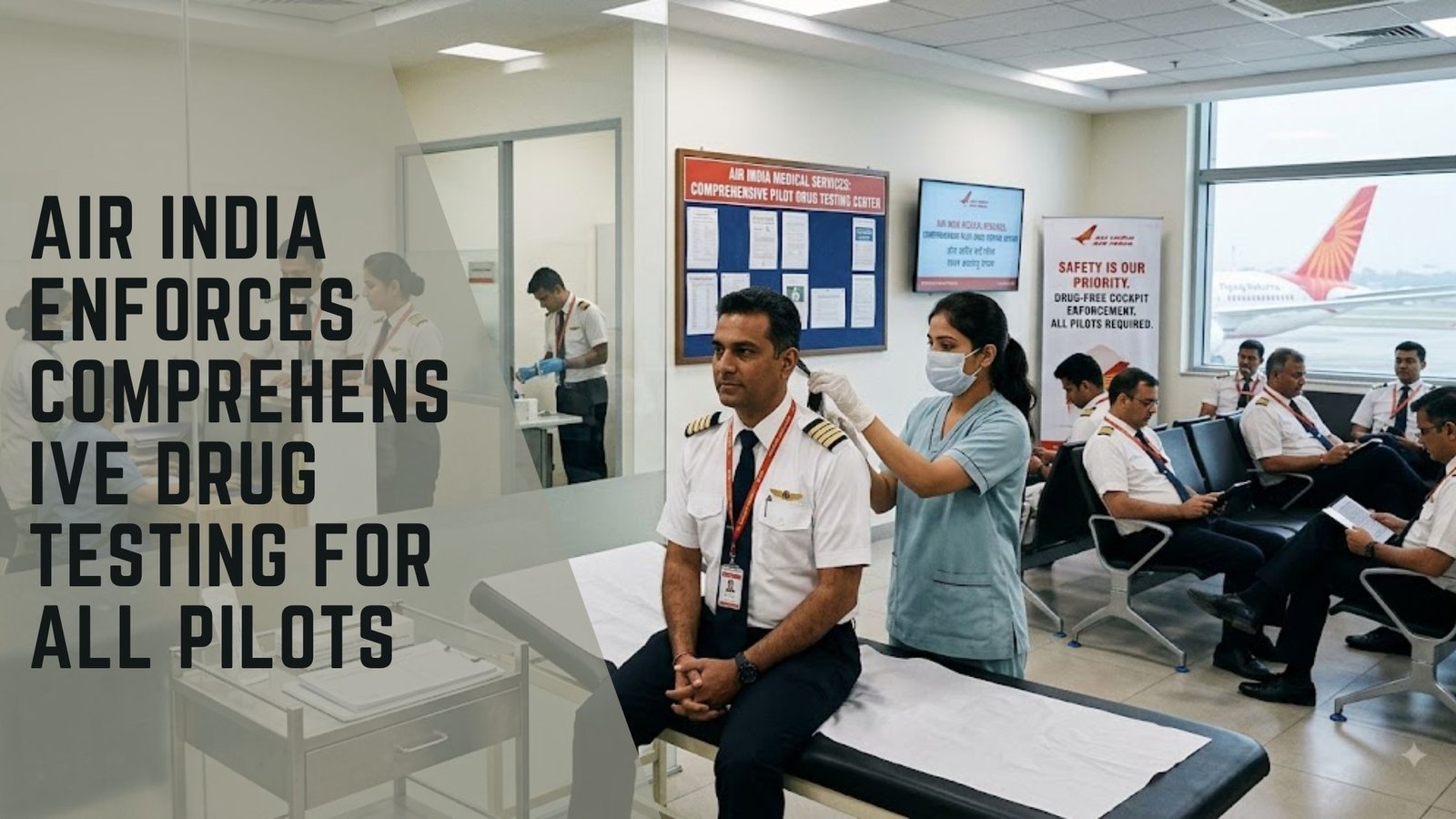
Air India Implements Mandatory Drug Testing Following Positive Test
In a decisive move to enhance aviation safety, Air India has announced the implementation of mandatory drug testing for all pilots, expanding beyond existing regulatory requirements. This initiative follows a recent incident where a pilot tested positive for marijuana, prompting the airline to reassess its current safety protocols.
Expanded Testing Beyond Regulatory Norms
Air India’s latest directive mandates substance testing across its entire pilot workforce, including those at its budget subsidiary, Air India Express. The tests will cover substances and medications prohibited under aviation regulations and will be conducted during training sessions at Air India’s Gurugram academy, as well as after flights at briefing centers and other designated locations. This expanded strategy aims to ensure that pilots are adhering to the highest standards of safety and reliability.
Strengthening Safety Measures
The decision for comprehensive testing comes in the wake of an incident involving an Airbus A320neo, which experienced an unexpected altitude drop of 300 feet during a flight from Phuket to Delhi on August 4. The event spurred an investigation, leading to the discovery that the flight captain had tested positive for marijuana in a subsequent drug test.
While current regulations require airlines to randomly test a minimum of 10% of their flight crew annually for psychoactive substances, Air India’s proactive approach aims to exceed these guidelines. The internal memo circulated by the company highlighted the importance of maintaining high safety standards and providing reassurance to passengers and stakeholders alike.
Industry-Wide Implications
This initiative by Air India sets a precedent in the aviation industry, emphasizing the critical need for stringent safety measures. By voluntarily imposing stricter testing protocols, the airline is not only prioritizing passenger safety but also setting an example for other carriers to follow.
The airline’s decision underscores the importance of continuous evaluation and adjustment of safety protocols in light of new challenges and incidents. As the aviation sector grapples with increasing complexities, such proactive measures are essential in ensuring trust and confidence in air travel.
Awaiting Official Statements
As of now, Air India has not provided an official comment regarding the expanded testing regime. However, the internal memo expresses a clear intent to uphold the airline’s commitment to safety and operational excellence. The aviation community and the public await further details and potential feedback on the impact of these new measures.
Future of Drug Testing in Aviation
Air India’s decision could potentially influence regulatory bodies to revisit existing guidelines and consider more comprehensive testing requirements for the industry as a whole. As safety remains paramount in aviation, such developments may lead to broader changes that further protect passengers and crew members.
In conclusion, while Air India’s expanded drug testing initiative is a direct response to a recent incident, it also reflects a broader commitment to safety and operational integrity. As the airline industry continues to evolve, these measures will play a crucial role in shaping future safety standards.