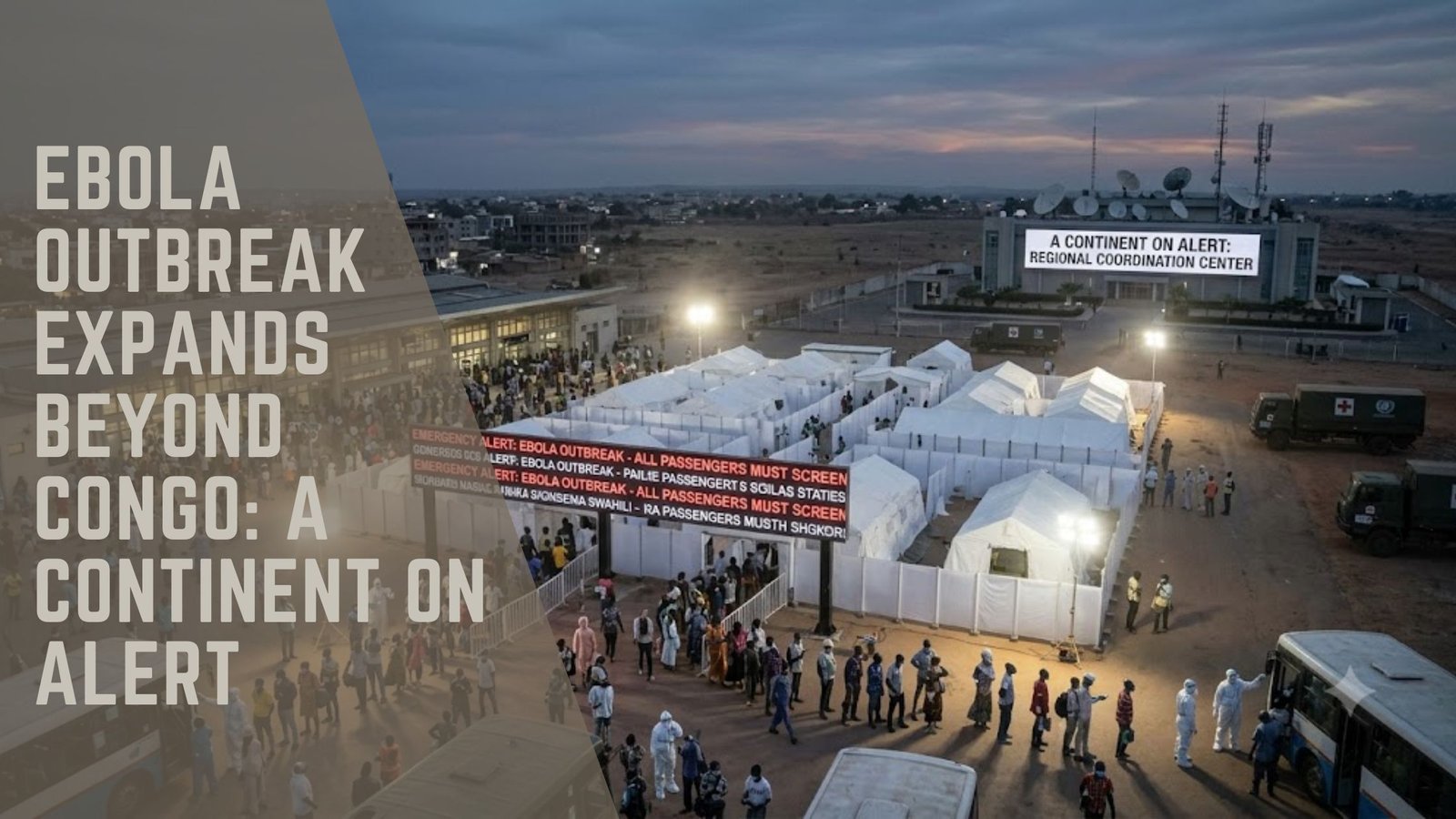
The recent Ebola outbreak originating in the Democratic Republic of Congo has escalated, now affecting multiple countries across Africa. This development marks the most extensive geographical spread of the virus in history, as the disease transcends national borders, raising alarm across the continent.
Outbreak Origins in Congo
Identified in eastern Congo in mid-May, the current Ebola outbreak is linked to the rare Bundibugyo virus. With no approved vaccine or treatment available, the outbreak has resulted in over 4,600 fatalities from 9,500 reported cases within Congo alone. The World Health Organization (WHO) has described this as the fastest-growing Ebola outbreak on record.
Regional Impact and Challenges
The alarming spread of the virus has been recorded in central, western, and eastern Africa. A significant challenge in containing the outbreak has been the delayed detection of initial cases, often identified only after symptoms appear or after infected individuals have traveled across borders, complicating containment efforts.
Nigeria’s First Case
In Nigeria, the first Ebola case was confirmed in Abuja, involving a woman who traveled from Uganda. The Health Minister, Muhammad Pate, stated that efforts are underway to trace and monitor 44 identified contacts of the infected individual. The patient began exhibiting symptoms on October 7 and was diagnosed shortly after being admitted to a hospital on October 11.
Uganda’s Ongoing Response
Simultaneous to Congo, Uganda declared its Ebola outbreak with an initial case traced to a traveler from Congo. Although WHO declared Uganda’s outbreak over by late August, after managing 20 cases with two fatalities, the country remains vigilant amidst regional threats.
Kenya’s Rising Cases
Kenya reported its first Ebola case in early October, concerning a man traveling from Congo through Uganda to Nairobi. He tested positive for the virus and succumbed to the disease on October 5. The outbreak in Kenya has since grown to nine cases, including healthcare workers and relatives of the first patient. Authorities have identified 135 contacts, 134 of whom are under quarantine, with ongoing efforts to prevent further transmission.
International Concerns: France’s Case
Beyond Africa, France confirmed an Ebola case in June linked to a doctor returning from a humanitarian mission in Congo. This remains the only instance of the current outbreak reaching outside the African continent. The patient received care in a specialized facility and recovered by early July.
Global and Regional Cooperation
The widespread nature of the outbreak underscores the need for increased international cooperation and support. Surveillance and rapid response teams are crucial in identifying and isolating cases to prevent further spread. Enhanced communication between nations and health organizations is vital to managing this escalating public health crisis.
With the virus affecting diverse regions and crossing international borders, the importance of comprehensive monitoring and swift action cannot be overstated. The current situation serves as a critical reminder of the globalized nature of infectious diseases and the necessity for a unified response to health emergencies.