Kenyan Judiciary Blocks US Ebola Quarantine Initiative
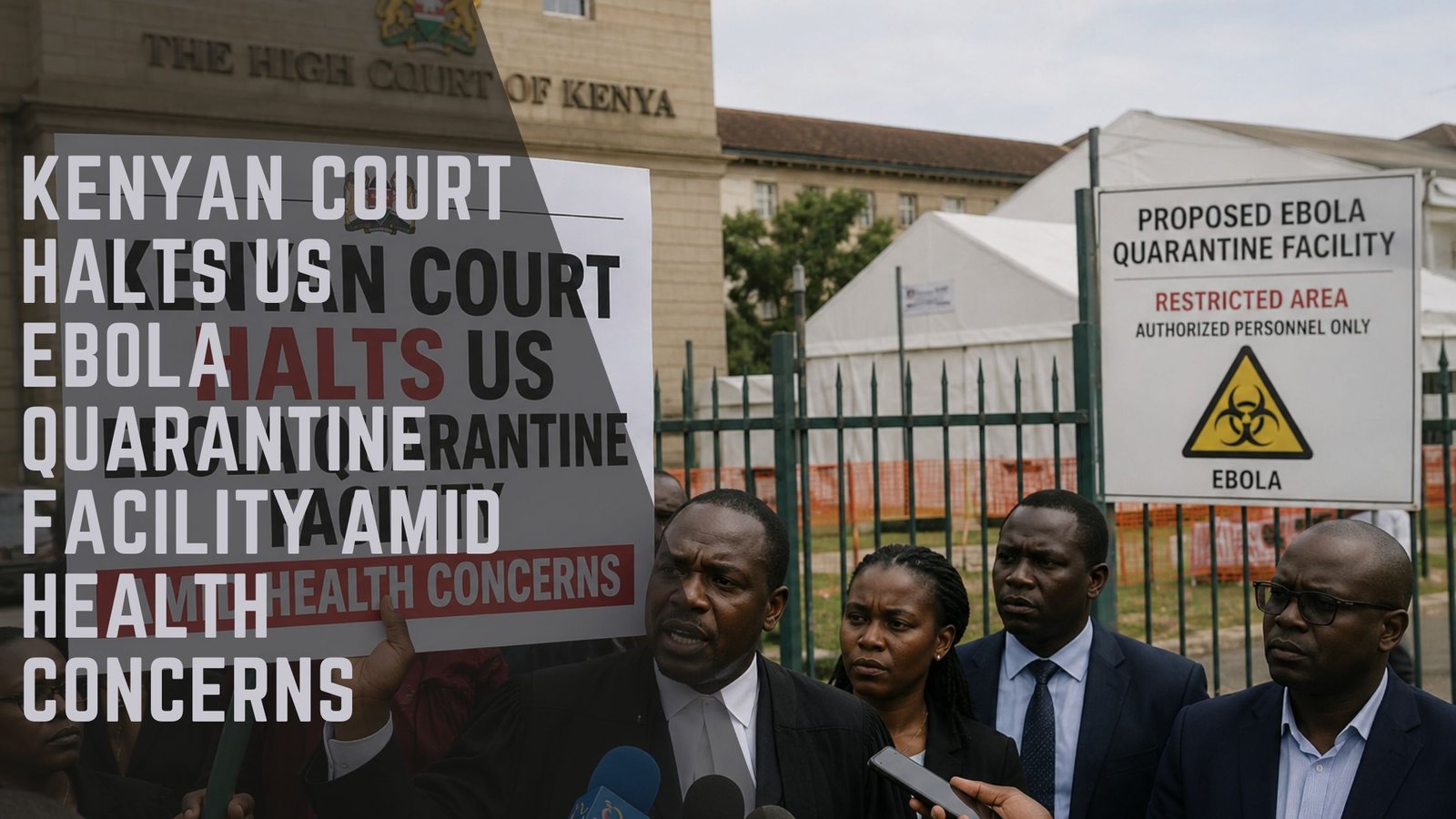
A Kenyan court has temporarily halted the establishment of an Ebola quarantine facility proposed by the United States, citing potential public health risks. This decision follows a legal challenge by the Katiba Institute, a legal advocacy group concerned about the implications of the plan.
Facility Details and Operational Plans
The proposed 50-bed quarantine facility, intended to be located at a Kenyan air force base, was aimed at accommodating Americans exposed to Ebola but not yet symptomatic. According to senior U.S. officials, the facility was scheduled to become operational shortly, specifically to manage individuals who had come into contact with the virus during outbreaks in the eastern Democratic Republic of Congo and Uganda.
Patients developing symptoms were to be transferred for treatment in other countries outside the U.S. The plan, however, faced significant backlash from Kenyan citizens and organizations, concerned about its impact on local public health.
Legal and Diplomatic Reactions
In response to the legal challenge, Kenyan High Court Judge Patricia Nyaundi issued an order suspending the government’s acceptance of any Ebola-exposed individuals under the agreement until the lawsuit is resolved. The next scheduled court hearing is on June 2.
The Trump administration has expressed a firm stance against allowing Ebola cases onto U.S. soil, contrasting with previous policies during the 2014-2016 Ebola outbreak. The facility is to be staffed by members of the U.S. Public Health Service, with over 30 personnel already trained and prepared for deployment.
Financial and Strategic Implications
The U.S. State Department has pledged $13.5 million to support Kenya’s Ebola preparedness efforts. However, the implementation of this plan has sparked debate over whether the facility should serve individuals of all nationalities, as Kenya suggests, or remain exclusive to U.S. citizens.
Since the outbreak’s confirmation in mid-May, the World Health Organization has reported over 1,000 suspected and confirmed Ebola cases, including 246 fatalities. Health experts warn that the actual numbers may be significantly higher due to delayed detection and the challenges of tracking suspected cases in conflict-ridden regions.
Local and International Criticism
The Katiba Institute’s lawsuit argues that the quarantine plan infringes on constitutional rights related to life, health, and public participation. Additionally, Kenya’s primary medical union has threatened industrial action unless the terms of the U.S. agreement are disclosed within 48 hours.
Some American health experts criticize the plan, fearing it might deter U.S. volunteers from participating in Ebola response efforts. Conversely, the Trump administration defends the initiative, asserting it would expedite patient care and enhance domestic safety.
Recently, a U.S. medical missionary contracted Ebola while working in the DRC and was subsequently treated in Germany, alongside five others exposed to the virus, with another individual receiving care in the Czech Republic.