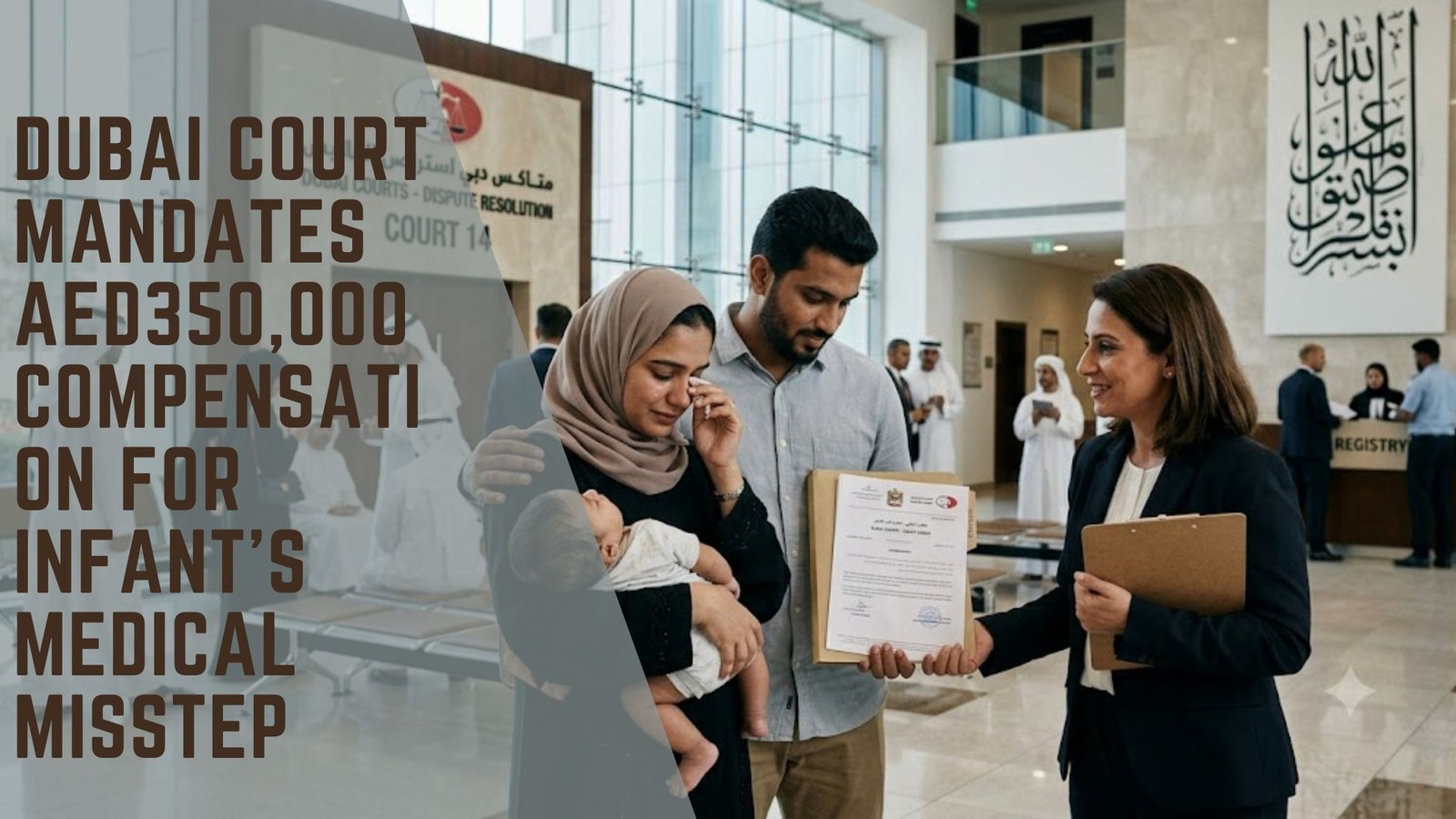
Dubai Court Holds Doctor and Hospital Accountable for Medical Oversight
In a landmark decision, the Dubai Civil Court of First Instance has mandated a pediatrician and his employing hospital to jointly compensate an infant’s father with AED350,000. The ruling stems from a medical oversight where the doctor failed to implement essential diagnostic and clinical monitoring procedures for a premature infant experiencing respiratory complications.
The Initial Medical Oversight
The case traces back to the birth of the infant, who was delivered through a caesarean section at 34 weeks, requiring immediate intensive care due to breathing difficulties. Despite initial improvements leading to his discharge, the child’s health subsequently raised alarms. The mother, observing persistent symptoms such as nasal congestion and noisy breathing, sought medical attention repeatedly from the pediatrician in question.
Worsening Condition and Emergency Intervention
Despite multiple hospital visits, the pediatrician maintained that the infant’s condition was normal. However, the infant’s health deteriorated sharply, prompting the family to seek urgent care at Al Jalila Specialist Hospital. The child arrived in a critical state, suffering from cyanosis and severe oxygen deprivation, necessitating immediate medical intervention to address what was described as a “respiratory stroke.”
Legal Proceedings and Medical Findings
Following the incident, the child’s father lodged a complaint with the Dubai Health Authority’s Medical Liability Committee, which determined that the pediatrician had committed a grave medical error. The doctor challenged this finding before the Supreme Committee for Medical Liability. The committee upheld the error classification but downgraded its severity, noting the absence of permanent disability.
Judicial Conclusion and Compensation
The court, aligning with the committee’s findings, affirmed the occurrence of a medical error. It emphasized that even a non-serious classification does not absolve liability when damage is demonstrably linked to the error. The verdict underscores the necessity of adhering to established medical standards, particularly in the care of premature infants.
Implications for Medical Practice
This ruling serves as a critical reminder to healthcare providers about the importance of thorough diagnostic and monitoring practices. The case highlights the potential legal and financial repercussions of failing to meet professional medical standards, especially in pediatric care where the stakes are profoundly high.