Senate Decision Alters Impeachment Vote Dynamics
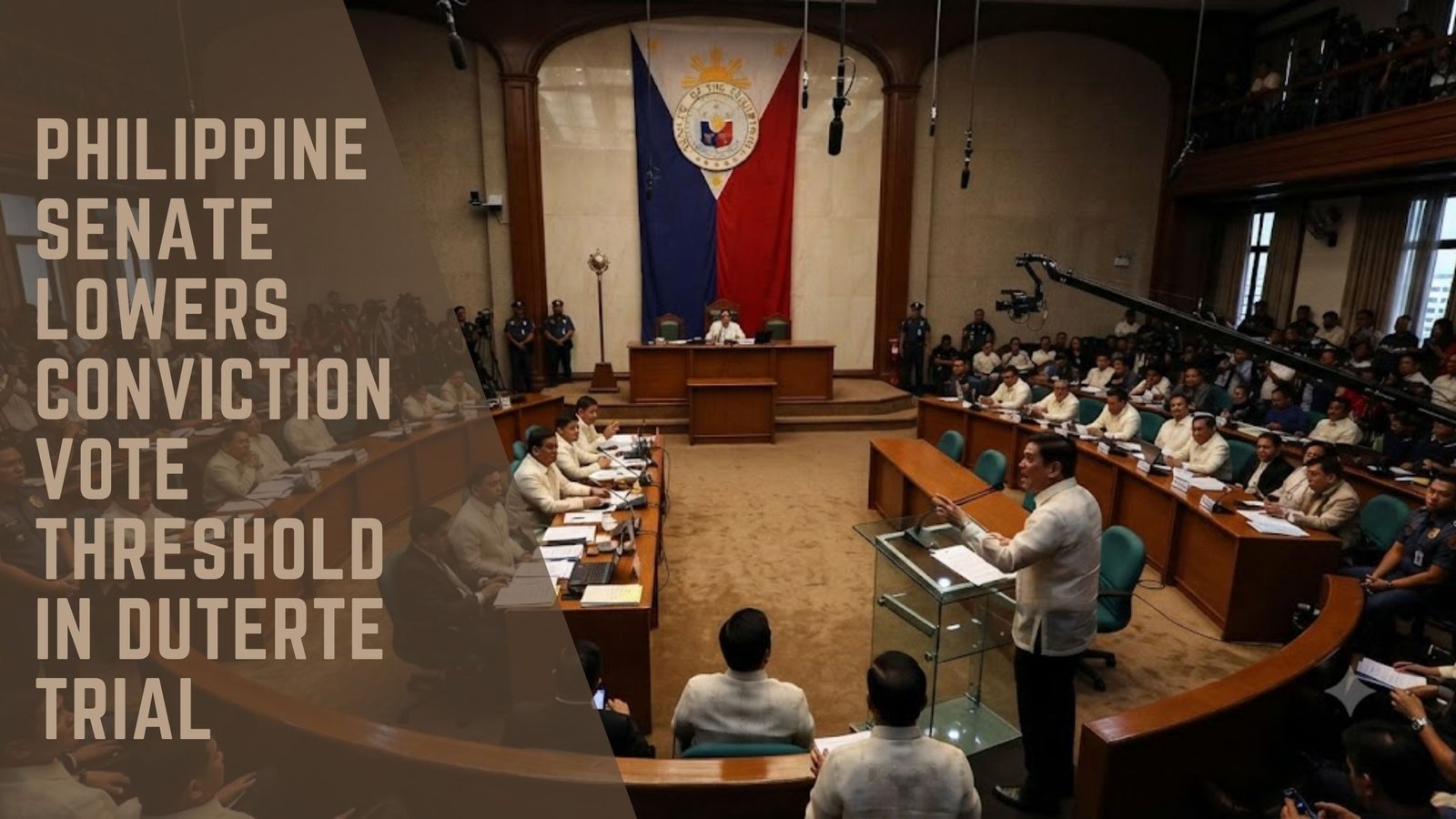
In a significant move, the Philippine Senate, functioning as an impeachment tribunal, has adjusted the necessary votes for convicting Vice President Sara Duterte. The adjustment reduces the prosecutorial burden, potentially impacting the political landscape.
Impeachment Court Ruling
The court’s decision centers on counting only those senator-judges actively participating in the trial. Currently, four out of the 24 senator-judges are unable to partake in the proceedings, thereby reducing the effective number of votes required for a conviction from 16 to 14. This ruling has sparked debate among senators, with some advocating for maintaining the 16-vote threshold, arguing it would ensure a more rigorous standard for conviction.
Political Implications
The impeachment proceedings against Duterte are the culmination of a rift with President Ferdinand Marcos Jr., once her political ally. The outcome of this trial is poised to influence the 2028 presidential race, where Duterte is a leading candidate. With Marcos constitutionally barred from reelection, his support for a successor becomes pivotal. A conviction would not only eliminate Duterte from the presidential race but also cast a shadow over her political career, as she faces allegations of corruption and misconduct.
Charges Against Duterte
Vice President Duterte is accused of misusing public funds, accumulating unexplained wealth, and making threats against President Marcos, the First Lady, and a former House Speaker. Duterte has firmly denied these accusations, asserting her innocence and framing the charges as politically motivated.
Expert Opinions and Potential Outcomes
According to Michael Henry Yusingco, a senior research fellow at the Ateneo Policy Center, the reduction in the voting threshold could enhance the prosecution’s ability to secure a conviction. “This move potentially increases the chances of a guilty verdict,” Yusingco noted, emphasizing the gravity of the court’s decision.
Public and Political Reactions
The adjustment in the Senate’s voting requirements has elicited varied reactions from political analysts and the public. Supporters of Duterte argue that the lowered threshold undermines judicial fairness, while critics contend it is a necessary step to hold powerful figures accountable.
Broader Implications for Governance
This development underscores broader themes of governance and accountability in the Philippines. The trial not only tests the resilience of democratic institutions but also reflects on the political climate and the public’s demand for transparency and integrity in leadership.
The Path Forward
As the trial progresses, the Philippines and its political actors are under intense scrutiny both domestically and internationally. The decision regarding Duterte’s future will have far-reaching consequences, influencing political alliances and the trajectory of future elections.
Ultimately, the lowered voting threshold in the impeachment trial represents a critical juncture in Philippine political history, with implications that extend beyond the immediate courtroom proceedings.