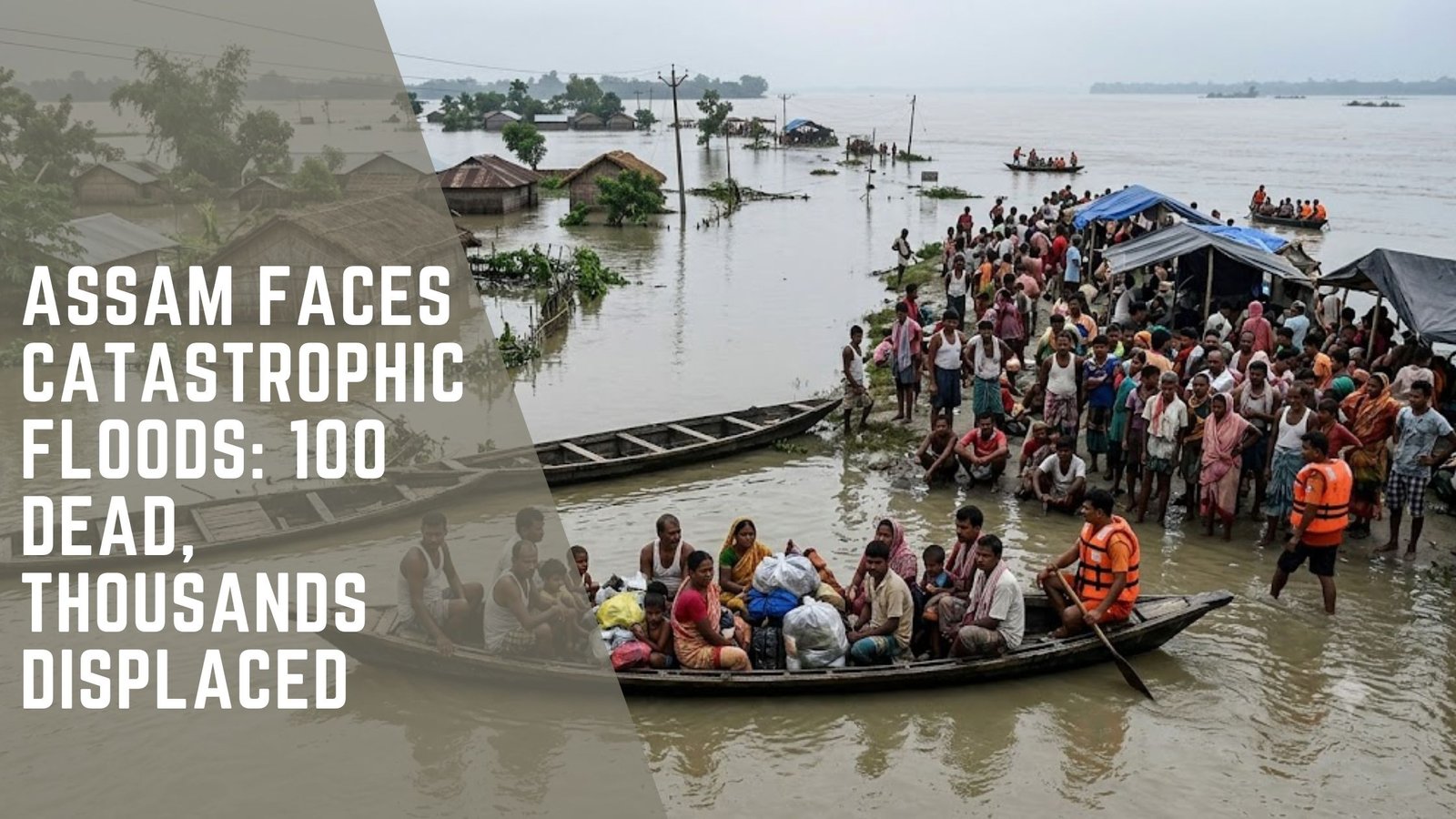
In the northeastern state of Assam, India, catastrophic flooding has resulted in the tragic loss of 100 lives as of the latest reports. The disaster continues to unfold, highlighting the urgent need for effective relief measures as the government grapples with the immense challenge of aiding affected communities.
Rivers Breach Danger Levels
The Assam State Disaster Management Authority has revealed that several major rivers, including the vast Brahmaputra, have surpassed danger levels. This has raised alarms for potential new flooding in districts already vulnerable. The Brahmaputra, which originates in Tibet and travels over 900 kilometers through Assam, has overflowed its banks, leading to widespread devastation.
Relief Camps House Thousands
Nearly 300,000 individuals have been forced to seek refuge in government-run relief camps. The flooding, which began last month, has affected over 700,000 people, submerging vast tracts of farmland, destroying homes, and damaging infrastructure, leaving a trail of destruction in its wake.
Despite some improvement in water levels, approximately 49,000 people remain in 125 relief camps and distribution centers. Emergency teams are deployed to evaluate the damage and identify the most pressing needs of the affected populations.
Impact on Agriculture and Livelihoods
The floods have also inflicted severe damage on Assam’s agricultural sector, resulting in substantial livestock losses. With the waters receding, many families are returning to discover their homes buried in silt, adding complexity to recovery efforts. The agricultural community, heavily reliant on both farming and livestock, faces a daunting road to recovery.
Assam’s Agriculture and Irrigation Minister, Pijush Hazarika, emphasized the urgency of damage assessments. “We have instructed officials to expedite damage assessments to enable the distribution of financial aid for rehabilitation,” he stated after a recent review meeting. Hazarika also mentioned that interim financial assistance has been extended to approximately 500,000 individuals thus far.
Recurring Flood Challenges
Assam is no stranger to severe monsoon-induced flooding, a recurring challenge that disrupts lives annually. Experts have linked these increasingly intense rainfall patterns to climate change, which is believed to be altering monsoon behaviors across South Asia. This year, the state has experienced intense rainfall followed by dry spells, exacerbating the flooding situation.
Government and Climate Response
Authorities are maintaining high alert levels as they continue monitoring weather conditions. The government’s response involves not only immediate relief efforts but also strategizing long-term measures to mitigate such disasters in the future. Focused efforts on strengthening infrastructure and enhancing predictive capabilities are vital to reducing future risks.
The ongoing crisis in Assam underscores the pressing need for comprehensive climate adaptation strategies and disaster preparedness plans. As the state confronts the immediate challenges of recovery and rehabilitation, it also faces the broader task of building resilience against future climate-related challenges.