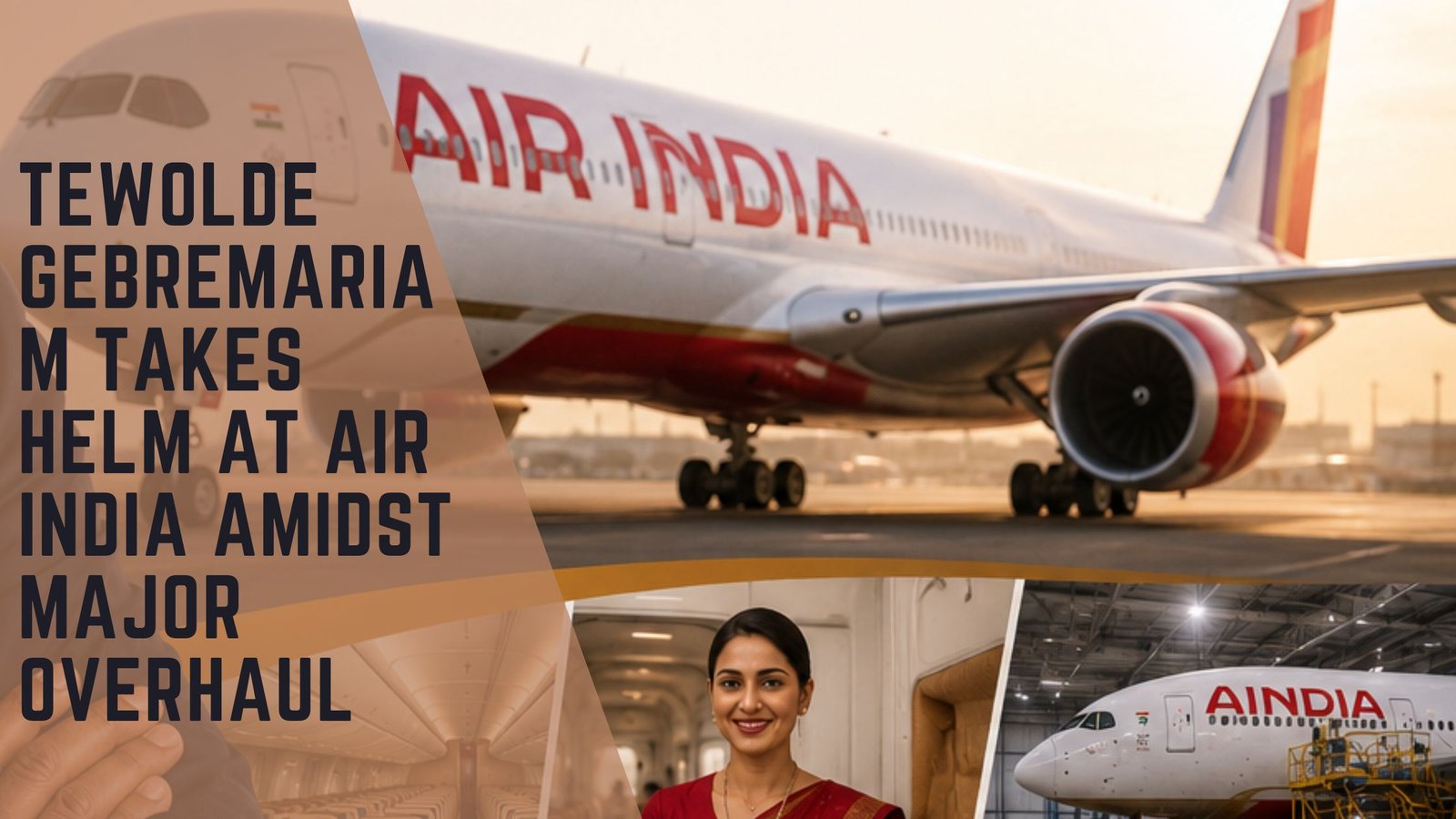
NEW DELHI: Tewolde Gebremariam, a seasoned aviation executive known for crisis management, has been appointed to head Air India as the airline embarks on a challenging transformation. His leadership comes at a pivotal moment, as the carrier seeks to overcome recent setbacks and reposition itself in the competitive aviation industry.
Background: A Proven Leader in Crisis
Gebremariam, who previously led Ethiopian Airlines to become Africa’s top airline, is no stranger to challenges. His leadership was tested during the catastrophic Ethiopian Airlines crash in 2019, which resulted in the grounding of Boeing 737 MAX jets globally. This experience, coupled with navigating the COVID-19 pandemic’s impacts on the airline industry, has prepared him for the formidable task ahead at Air India.
Under his guidance, Ethiopian Airlines not only managed to survive but also thrive without state bailouts, focusing on cargo operations to offset the decline in passenger travel. This strategic pivot demonstrated his ability to adapt in a rapidly changing environment, a skill that will be crucial in his new role.
Air India’s Current Challenges
The Tata Group, which owns a majority stake in Air India, has charged Gebremariam with revitalizing the airline’s operations. The primary challenges include restoring safety standards after a fatal crash last year that killed 260 people, updating an aging fleet, and addressing operational inefficiencies.
Additionally, Air India faces logistical hurdles such as Pakistan’s airspace ban, which complicates international routes and increases fuel costs. The airline’s financial health is also under scrutiny, with losses exceeding $2 billion in the last fiscal year, and ongoing regulatory scrutiny due to safety compliance issues.
New Leadership, New Direction
Gebremariam’s appointment marks a strategic shift in the Tata Group’s approach to turning around Air India. Previously focused on mergers and asset acquisition, the focus is now on operational excellence and profitability. This includes a potential merger with Vistara and large-scale aircraft orders to modernize the fleet.
The decision to bring in an outsider like Gebremariam signifies the importance Tata places on experienced leadership to navigate these complex challenges. His track record as a ‘change leader’ and his previous success in expanding Ethiopian Airlines’ operations at the Addis Ababa hub highlight his capability to lead large-scale transformations.
The Path Forward
Gebremariam steps into the role following Campbell Wilson’s resignation, with the formal transition expected soon. As he takes charge, Air India’s internal culture and processes will likely see significant changes, focusing on stringent safety compliance and operational efficiency.
His experience managing Ethiopian Airlines’ operations in India and Southeast Asia provides a valuable perspective as he addresses Air India’s competitive landscape, dominated by local player IndiGo and international rivals seeking a share of lucrative routes.
Gebremariam’s leadership philosophy, which emphasizes professional management free from owner interference, could prove instrumental in fostering a culture of accountability and innovation at Air India. His previous advisory roles with Delta Air Lines and the World Bank underline his global perspective and understanding of aviation dynamics.
Looking Ahead
The turnaround strategy outlined by Air India’s Chairman N. Chandrasekaran anticipates a decade-long journey to achieve sustainability and profitability. With Gebremariam at the helm, the airline is poised to implement strategic changes aimed at restoring its reputation and financial health.
As Air India navigates these turbulent times, the appointment of a leader with Gebremariam’s expertise and vision could be a crucial step towards a successful reset, positioning the airline for long-term growth in a competitive global market.