Global Warming Transforms the Mediterranean Sea
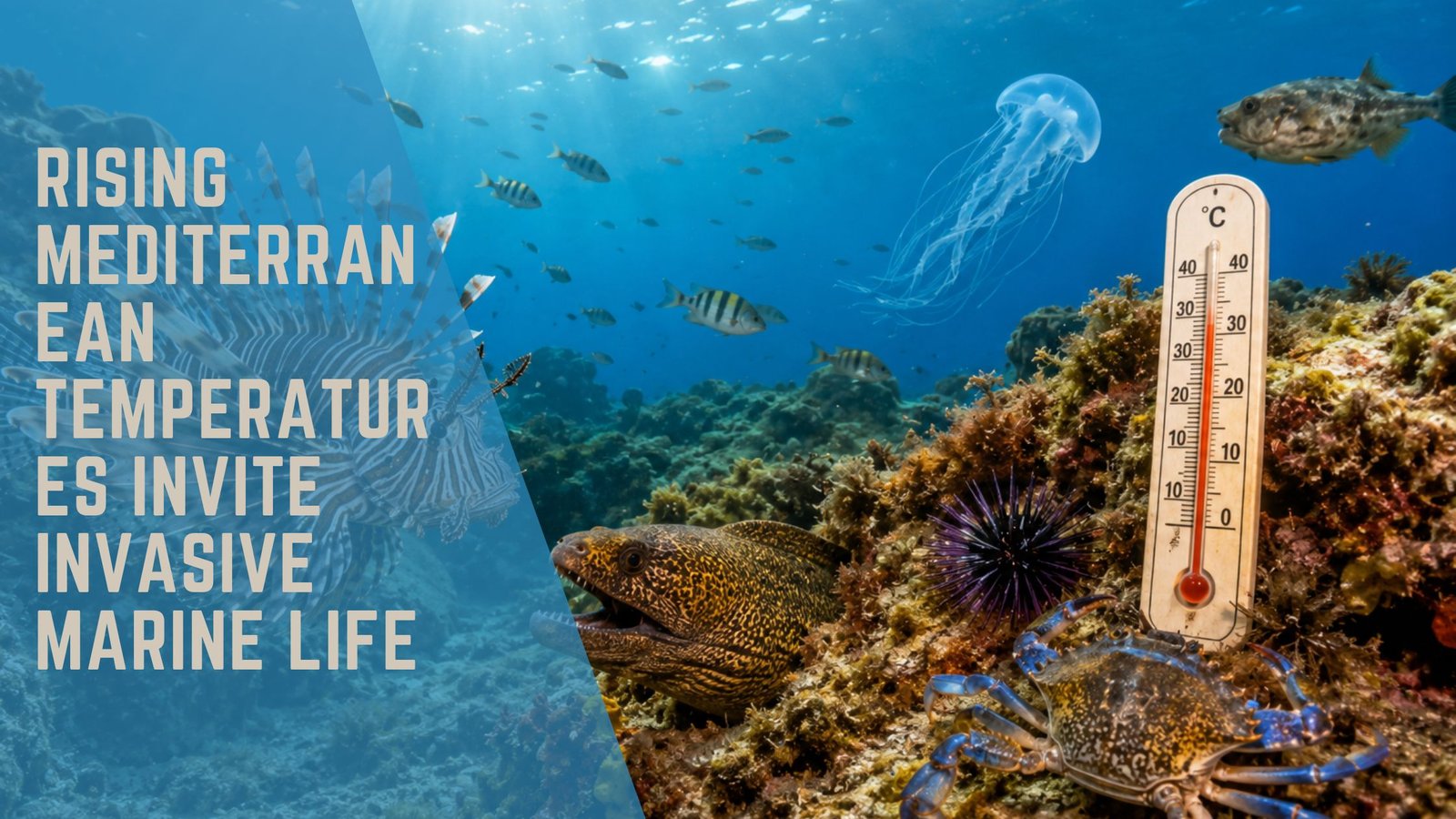
The Mediterranean Sea, once a cradle of ancient civilizations and vibrant marine biodiversity, is undergoing a significant transformation due to climate change. Rising temperatures, primarily driven by the burning of fossil fuels, are attracting an influx of invasive species, dramatically altering the ecological balance of the region.
Impact of Climate Change on Marine Biodiversity
Renowned scientists are sounding the alarm as the Mediterranean has been identified as a climate change ‘hot spot.’ According to the Mediterranean Experts on Climate and Environmental Change, the sea’s temperatures are projected to rise between 2 to 6 degrees Celsius by the end of the century. This shift will likely result in more severe and frequent heatwaves, posing a substantial threat to native marine species.
Invasive Species: A Growing Threat
Ernesto Azzuro, a marine biologist with the Italian National Research Council, explains that the rise in sea temperature has created an inviting environment for invasive species such as the spotted puffer fish and lionfish. These species, entering primarily through the Suez Canal, are now spreading towards Western Mediterranean shores, including France and Spain.
The United Nations Food and Agriculture Organization highlights that while invasive species have been present for decades, their proliferation has accelerated since the early 2000s. The lionfish, for example, was first detected in the eastern Mediterranean in 2012 and has since rapidly expanded westward.
Local Communities Face Economic Challenges
Coastal communities, particularly in regions like Cyprus, are bearing the brunt of these ecological changes. Indigenous fish stocks, including species such as the red mullet, are being replaced by invasive species, affecting local fishermen’s livelihoods. This shift is not merely an ecological concern but also an economic one, as traditional fishing communities struggle to adapt.
Proposed Solutions and Mitigation Strategies
Scientists and policymakers are exploring various strategies to mitigate the impact of invasive species and adapt to the changing marine environment. One approach is to commercialize certain edible invasive species, such as the lionfish, which commands high market prices in some countries. Additionally, there are proposals to financially incentivize fishermen to catch inedible species, like the toxic puffer fish, for safe disposal.
Piero Genovesi Papik, a zoologist with Italy’s Higher Institute for Environmental Protection and Research, emphasizes the need for international cooperation in addressing this issue. He advocates for enforcing global treaties to treat ballast waters in incoming ships, reducing the introduction of new invasive species by up to 99%.
Future Prospects for the Mediterranean Ecosystem
Despite the irreversible changes that have already occurred, experts remain hopeful about the potential for ecological restoration. Initiatives to amend fishing policies aim to promote the recovery of native species, and efforts to cultivate more resilient strains of mollusks are underway.
As Papik notes, the challenge in the coming years will be to discover innovative ways to restore and preserve the Mediterranean’s unique marine environment. The scientific community continues to explore multifaceted approaches to tackle the threats posed by climate change and invasive species, striving to ensure a sustainable future for this vital body of water.